
How Family Entertainment Centers Use VR Attractions During Heatwaves and Rainy Days
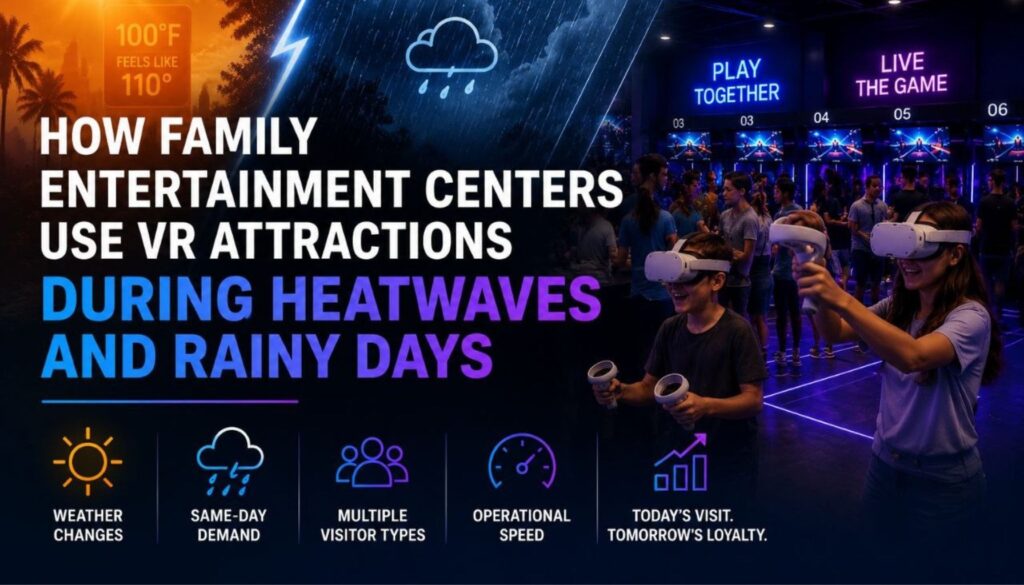
Why Indoor Attractions Benefit When Outdoor Plans Change A heatwave pushes temperatures past what most families will tolerate outdoors. A summer storm cancels afternoon plans. A tourist group abandons the beach and starts searching for something to do indoors. Within a few hours, a quiet weekday turns into one of the busiest periods of the week and the venues that capture that traffic are rarely the loudest marketers. They are the ones that were operationally ready before the weather changed. For VR arcades, family entertainment centers, and location-based entertainment venues, weather-driven demand is some of the highest-intent traffic the season produces. These visitors are actively looking for something to do today. Converting that interest into a booking depends on local visibility, a clear booking journey, and the operational capacity to deliver when multiple groups arrive in a short window. The foundations of local visibility and seasonal positioning are covered in the first article in this series: How VR Arcades Can Adapt to Summer Demand Shifts and Capture More Indoor Entertainment Traffic. Why VR Attractions Benefit When Outdoor Plans Change Extreme weather does not create leisure demand from nothing. It shifts existing demand from one category of venue to another. When heat, rain, or poor air quality makes outdoor activities less appealing, consumers look for indoor alternatives and the family entertainment center sector is one of the primary beneficiaries of that shift. Research on North American FEC market growth consistently shows strong demand for indoor, experience-driven attractions, particularly those that support group participation. This is why FECs frequently combine multiple attractions under one roof. Bowling, arcades, indoor mini golf, karting, laser tag, escape rooms, and VR experiences all compete for the same visitor at the same moment. When outdoor plans collapse, VR arcades sit inside that same consideration set, which makes how the venue presents itself online, and how quickly it can operate when guests arrive, commercially significant. The Same-Day Booking Moment Weather-driven visitors behave differently from planned visitors. A birthday party may be booked weeks in advance. A school group outing may be organized months ahead. A family escaping a heatwave often decides within hours, a tourist dealing with unexpected rain may search for local attractions that afternoon, and a friend group whose outdoor plans fell apart wants an immediate alternative. These visitors are not researching extensively. They want answers: Can we book today? How much does it cost? How many people can play, and for how long? Is it suitable for children? The venue that surfaces that information fastest, with accurate hours and a clear booking path, usually wins the session. Google has increasingly emphasized accurate, specific business information as a core factor in local discoverability, including within AI-powered search results, which raises the cost of having outdated or incomplete listings during demand spikes. Multiple Visitor Types, One Peak Period One of the more common operational mistakes during weather-driven surges is treating the incoming traffic as a single audience. In practice, a busy heatwave afternoon can bring families prioritizing supervision and simplicity, tourists who need an easy-to-understand experience within a tight schedule, teenagers and young adults focused on multiplayer social experiences, and pre-booked birthday parties already on the calendar, all arriving within the same two-hour window. Managing those groups simultaneously is where manual coordination breaks down. Staff who are troubleshooting headsets cannot simultaneously onboard walk-ins. A session running late for one group delays the next group booking. The multiplayer coordination that works smoothly during a planned birthday party can stall under unplanned volume if the workflow depends on individual staff judgment rather than repeatable process. Operational Readiness During Demand Spikes Several venue operators have described the same pattern: strong walk-in traffic during a heatwave, followed by the realization that session launch bottlenecks were limiting how much revenue they could actually capture. Weather creates the demand. Operations determine how much of it converts. A five-minute delay launching a session affects the next booking. A slow headset preparation process reduces throughput during peak hours. When a staff member troubleshoots a hardware issue, every walk-in waiting in the lobby is evaluating whether the venue is worth the wait. The venues that consistently capture weather-driven revenue tend to treat session launch speed, multiplayer coordination, and guest onboarding as operational disciplines rather than ad hoc decisions, the same disciplines that protect throughput and group booking quality throughout the rest of the season. Five Things to Review Before the Next Weather Spike 1. Audit your local listings. Verify operating hours, contact information, photos, and booking links across your Google Business Profile. Inaccurate or incomplete listings cost bookings on the highest-intent days of the season. 2. Simplify the booking journey. Pricing, session length, age recommendations, and group sizes should be visible without requiring visitors to search through multiple pages. Same-day traffic has low patience for friction. 3. Prepare for different visitor profiles. Build recommended experience paths for families, tourist groups, friend groups, and larger parties before demand arrives rather than improvising at the desk. 4. Audit session launch procedures. Map where staff lose time during onboarding, headset preparation, and multiplayer setup. A documented workflow that any team member can follow consistently is the difference between 20-minute and 35-minute session launch cycles. 5. Build a weather response plan. Have marketing assets, social posts, and operational procedures ready in advance. Reacting after a heatwave warning has already been issued leaves less time to capture the most valuable part of the traffic window. From Weather Traffic to Repeat Visits Weather-driven traffic is short-term in nature, but the relationships it creates can last through autumn and beyond. A family that discovers the venue during a rainy weekend can become a future birthday party booking. A tourist group that had a smooth session experience generates reviews and referrals that continue driving organic traffic after the weather changes. The venues that benefit most from these spikes tend to focus on converting the visit into a relationship: capturing contact information, offering a clear return incentive, and delivering a session experience consistent enough