
Standalone Free Roam Games Worth Adding to Your Lineup in 2026
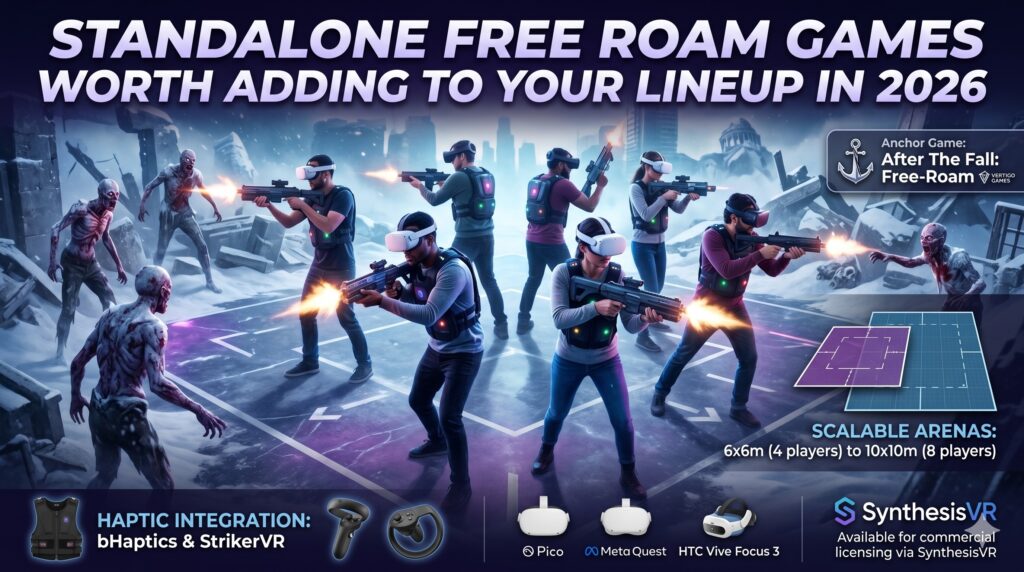
Most standalone VR free roam venues run on Pico, Meta Quest, or HTC Vive Focus 3 hardware, and the content question that matters is the same across all of them: which titles hold up under repeat play, and which go stale by month three. The operators who build stable rotations tend to do it the same way. They pick one AAA anchor guests recognise, one shorter session their staff can run fast during peak hours, and one title that no competing venue in the area can offer. This week covers a lineup built on that logic, starting with the anchor and following with two alternatives that expand what your library can do without expanding what your staff has to learn. Game Highlight: After The Fall: Free-Roam After The Fall: Free-Roam is a co-op VR shooter for up to 8 players from Vertigo Games, the studio behind Arizona Sunshine. Your guests walk into the booking already knowing the aesthetic and the genre because the IP carries weight outside the LBE market. That recognition matters for conversion at the counter, and it matters for repeat bookings when groups come back asking for “the zombie one” by name. The game itself scales across two arena footprints, 6x6m for up to 4 players and 10x10m for up to 8, so the same license covers smaller weekday groups and full weekend parties. Haptic integration with bHaptics and StrikerVR pushes the immersion past what most standalone titles deliver, which is the kind of detail regulars notice after their third or fourth session. The Snowbreed enemies, the post-apocalyptic Los Angeles setting, and the co-op objective-based structure give the session a clear arc that plays well with both first-timers and experienced VR players. Available on Pico, Meta Quest, and HTC Vive Focus 3 through SynthesisVR for commercial LBE licensing. Learn more: https://deployreality.com/synthesisvr/games/hmd-pico/after-the-fall-free-roam SynthesisVR Community Pages for Free Roam Games Alongside the game itself, SynthesisVR runs Community Pages built for Location-Based Entertainment VR operators, developers, and industry professionals. Check our After The Fall: Free-Roam: Community Page These pages work as living knowledge hubs, where operators can: Unlike traditional consumer-focused communities, SynthesisVR Community Pages are purpose-built for professionals, helping operators make informed decisions, improve uptime, and deliver better experiences to guests. This initiative reflects SynthesisVR’s long-standing commitment to not just distributing content, but supporting the businesses that run it. Annual License with Area Exclusivity Protect Your Market. Simplify Your Costs. After the Fall free roam free roam now offers a Fixed Location Annual License with built-in exclusivity within a 20 km (12.4 mile) radius. Nearby venues cannot offer the same title, helping you protect local demand and strengthen your competitive positioning. The Fixed Location model provides one flat fee that covers your entire venue up to the maximum supported player count, eliminating per-station tracking and simplifying budgeting. Why operators choose this model The Fixed Location license simplifies budgeting by offering a single flat fee per location, covering all supported stations without the need for per-minute tracking or variable billing. This allows operators to forecast costs more accurately, maintain stable margins, and reduce administrative overhead tied to usage monitoring. How to Evaluate Before You Commit The most reliable evaluation method is a staff session before a title enters your public rotation. It surfaces onboarding friction, space edge cases, and reset cycle times that spec sheets do not show. SynthesisVR offers free test access across the commercial VR games catalog, every title above available to trial before you license. SynthesisVR is a VR management platform built for LBE operators, with 350+ experiences available through one content marketplace. Every title here runs through the same interface as the rest of your library, with no additional platform switching or separate session management required. Browse the full standalone free roam catalog to see arena specs, player counts, and licensing options.Explore the full SynthesisVR content marketplace here!
Week 10: Content Licensing: The Legal Minefield Most Operators Ignore
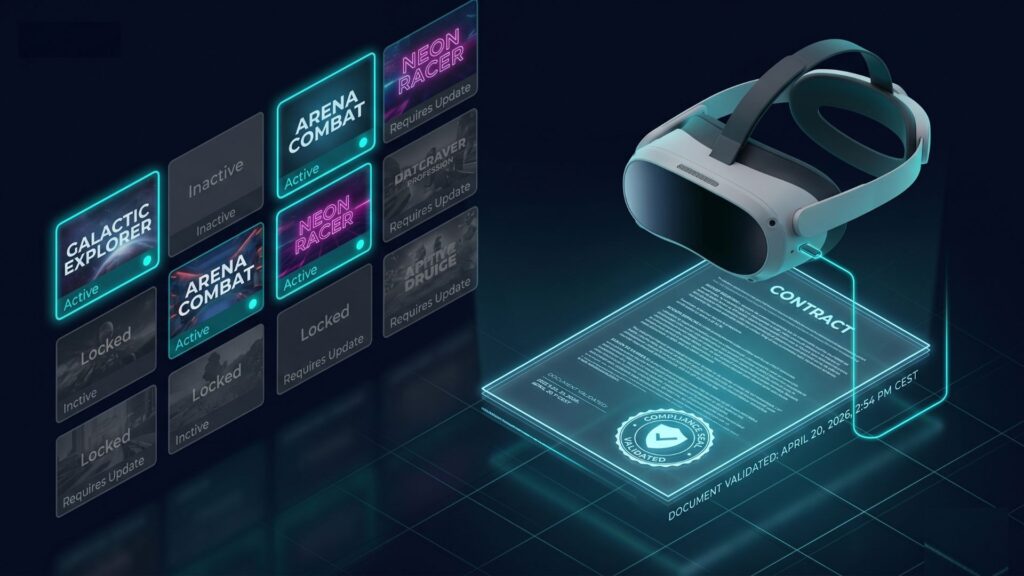
From First Headset to Fully Operational VR Arena Most operators figure out their content strategy by accident. They launch with a few titles, add games when players ask for something new, and build a library over time based on instinct and availability. It works well enough in the early months. The problems appear later, usually when the venue is busier, the library is larger, and making changes is harder. Licensing is the last thing operators think about and the first thing that can create problems at scale. Why commercial licensing is not optional When a developer publishes a VR game for home use, the consumer license covers one person playing on their own headset. A venue running that same title across multiple stations for paying customers, session after session, is operating under a completely different use case. Commercial use is a separate licensing category, and consumer licenses do not cover it. The value of a title changes in a commercial setting. In a venue, a game can generate thousands of hours of billable session time over its lifetime. Consumer pricing is built around personal use. Commercial licensing reflects the actual value the content delivers when it is running as part of a revenue-generating business. This is not a grey area. UploadVR’s guide on starting a VR arcade legally is direct on this: regular game purchases do not cover commercial arcade use. Developers or licensing programs must grant permission before a title runs commercially. The risks of buy once, play forever thinking The assumption behind most early content decisions is that a game purchase is a permanent unlock. Buy the title, install it, run it indefinitely. In a home context, that is accurate. In a commercial venue, it is not. Several operators have assumed a one-time purchase covered commercial use until developers reached out directly. Licensing problems usually surface late and they are rarely cheap to fix. By the time the issue appears, the venue may need retroactive licensing, a content cleanup across multiple stations, and a revised operating process. None of that is straightforward when the business is already running at volume. The venues that avoided that situation did not do anything complicated. They built a licensing framework before they needed one, chose a platform that handled the mechanics automatically, and made decisions based on usage data rather than instinct. How pay-per-minute aligns developers and operators Pay-per-minute works because it connects cost to actual usage. Operators pay for the value they consume, and developers get compensated in proportion to how often their content runs commercially. The logic is straightforward: flat purchases disconnect payment from use, which gives developers no signal about how their content performs in venue environments and no financial reason to maintain it there. That model also fits venue economics better than fixed purchases. Some titles drive high repeat play. Others work better as short-session or event content. Usage-based licensing gives operators more flexibility to test titles before committing, and gives developers a reason to maintain and expand content that is performing well in commercial environments. Why transparent usage tracking protects everyone If a venue can see which title runs, where it runs, and how often, the operator can choose the right licensing model with real data instead of guesswork. That visibility also changes how operators think about their content library. Venues that track usage start asking different questions before adding a title: does this fit our session lengths, our reset cycle, our throughput targets? That thinking compounds over time. Venues with deliberate libraries run fewer titles more effectively. They know which games their audience returns for, which titles justify a lifetime license, and which are worth testing on pay-per-minute before committing to a fixed fee. Transparent tracking also protects developers. When developers see consistent commercial usage, they can trust that the content is generating fair value, which supports ongoing updates and future releases. SynthesisVR’s dashboard gives operators exactly that visibility: usage tracked automatically by title and station, available in real time. The SynthesisVR knowledge base covers the operational flow for starting commercial licensing, managing balance, and keeping billing aligned with actual use. What licensed operators access that others do not The practical difference between licensed and unlicensed operation is not just legal exposure. It is access. Developers who see consistent, fairly compensated usage on a platform invest in maintaining and updating their titles. Operators inside the licensing ecosystem get those updates. They get early access to new releases. They get a content relationship with developers that simply does not exist for venues running consumer builds commercially. SynthesisVR’s marketplace covers 400+ titles built specifically for location-based entertainment use. Every title carries the commercial rights needed to run it legally. The library grows because developers see real commercial value in contributing to it. That value depends on operators participating in the system correctly. A full breakdown of how the licensing models work, including pay-per-minute, fixed station and location fees, lifetime licenses, and event access, is covered in the SynthesisVR commercial licensing overview. The standalone licensing blog on the SynthesisVR site covers how the licensing models work in practical detail, including pay-per-minute, fixed station and location fees, lifetime licenses, and event access. If you want the mechanical breakdown, that is the right place to start. What it does not cover is what happens to your content strategy when licensing is treated as an operational layer rather than an afterthought. Multi-location operators face a different version of this problem A single venue can manage content informally and stay on top of it. Multiple locations cannot. The inconsistency surfaces quickly: different titles at different sites, different billing arrangements, different staff making different decisions about what to install and remove. Franchises and multi-site operators who have not centralized content management discover that each location has effectively built its own library with its own licensing status, and none of it is visible from one place. Centralized content management is one of the clearest operational advantages SynthesisVR offers at scale. Operators managing multiple locations
PCVR Free Roam Games Worth Adding to Your Lineup in 2026
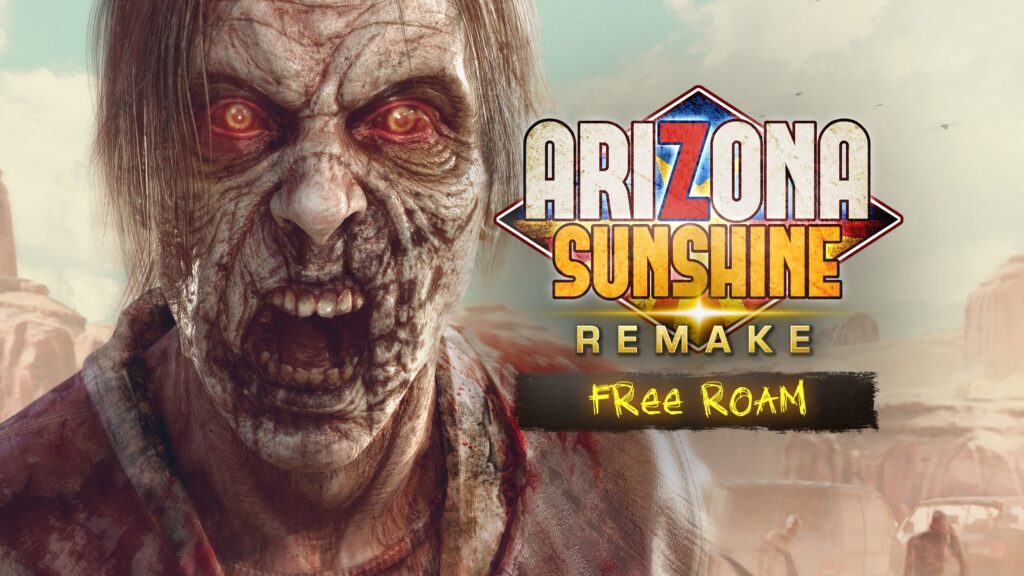
Most PCVR free roam venues build their library around one or two anchor titles and stop there. That works until your regulars have played those titles five times and your rebooking rate starts to slide. The operators who avoid that problem tend to do one thing differently: they map their content library around player intent rather than just game availability. Arizona Sunshine Remake: Free-Roam is one of the strongest PCVR free roam titles and arguably one of the most popular Free-Roam game in the world exclusive to SynthesisVR content marketplace. This also create a dependency risk if they are carrying the bulk of your sessions alone. This post maps the titles on the SynthesisVR PCVR free roam catalog that sit closest to each anchor in player intent, arena footprint, and group size, so you can expand your lineup without retraining your audience. Game Highlight: Arizona Sunshine Remake: Free-Roam Arizona Sunshine is one of the most recognized names in VR. The Remake brings that IP into the free roam arena with co-op zombie combat, next-generation visuals, and scalable configurations from 6×6m to 10×10m for up to eight players. Guests already know the franchise. The free roam format gives them a version of it they cannot get anywhere else, and cannot replicate at home. Available exclusively on SynthesisVR for commercial LBE licensing. Learn more: https://deployreality.com/synthesisvr/games/hmd-steamvr/arizona-sunshine-remake-free-roam Introducing SynthesisVR Community Pages for Free Roam Games Alongside the game, SynthesisVR is keen to build communities based on games using Community Pages, an initiative designed specifically for Location-Based Entertainment VR operators, developers, and industry professionals. Check our Arizona Sunshine Remake: Free Roam — Community Page These pages are built to serve as living knowledge hubs, where operators can: Unlike traditional consumer-focused communities, SynthesisVR Community Pages are purpose-built for professionals, helping operators make informed decisions, improve uptime, and deliver better experiences to guests. This initiative reflects SynthesisVR’s long-standing commitment to not just distributing content, but supporting the businesses that run it. If your guests enjoy Arizona Sunshine Remake: Free-Roam, these are worth adding: Corpus Animatum Corpus Animatum has a backstory no other title on the platform can claim. The studio behind it, CoreVR, originally set out to open their own LBE venue. When COVID made that impossible, they put that energy into building the games they wished existed, designed for venues from the very first session, not adapted from a home VR title. That origin shapes everything about how the game operates. It supports 1–8 players across 6×6m and 9×9m arenas. Session pacing runs six levels at roughly five minutes each. Controls are kept deliberately simple so any group gets into it fast regardless of VR experience. Players get dual pistols with one-handed reloading, melee combat, physical teammate revives, and full-body presence without full-body tracking hardware. Operator controls let you adjust spawn rates and difficulty in real time, drop in weapons, skip stages, and recover sessions with scores preserved if something goes wrong. bhaptics vest support is included. If The Hallow was part of your lineup, Corpus Animatum is a direct replacement and then some. Learn more with Corpus Animatum community page. Corpus Apocalypse The sequel is live on the marketplace. Corpus Apocalypse is the second chapter in the CoreVR series, same studio, same operator-first design logic, bigger environment. The doctor escaped Prospect Town. Now he is in the city, and the zombie hordes are larger, more varied, and armed. Boss encounters and a helicopter finale give the session a clear arc that players remember. Same specs as Corpus Animatum: 1–8 players, 6×6m to 9×9m arenas, full operator control panel, real-time difficulty adjustment, and bhaptics vest support. If your guests have already played Corpus Animatum, the sequel is a natural next booking rather than a content gap. If they have not played either, both titles are available on a one-week free trial, worth running back to back in a staff session to see how the arc plays across a longer visit. Learn more with Corpus Apocalypse community page. How to Evaluate Before You Commit The most reliable evaluation method is a staff session before a title enters your public rotation. It surfaces onboarding friction, space edge cases, and reset cycle times that spec sheets do not show. SynthesisVR offers free test access across the commercial VR games catalog, every title above is available to trial before you license. SynthesisVR is a VR management platform built for LBE operators, with 350+ experiences available through one content marketplace. Every title here runs through the same interface as the rest of your library, with no additional platform switching or separate session management required. Browse the full PCVR free roam catalog to see arena specs, player counts, and licensing options. Explore the full SynthesisVR content marketplace here!
Week 9: Staff Training and the 15-Minute Cycle
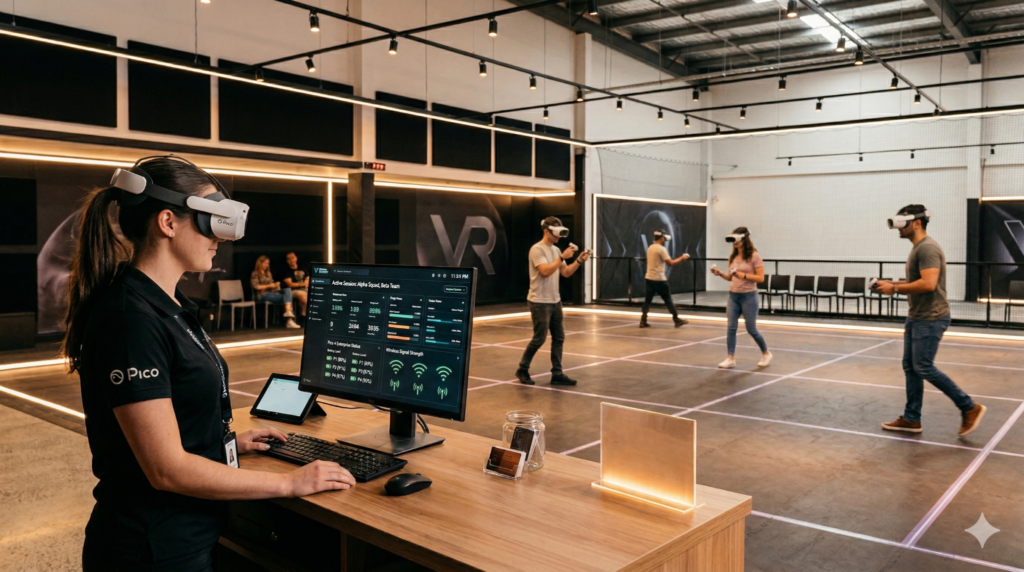
Part of the series: From First Headset to Fully Operational VR Arena Week 8 covered the launch sequence and why the gap between groups is where throughput is won or lost. Week 9 moves to the layer above that. A reliable launch sequence only holds if the person running it performs it the same way every time. Most free roam venues cannot guarantee that because they build operations that depend on individual knowledge rather than systems. The 15-minute cycle is the reset window between one group leaving and the next group entering an active experience. It covers headset collection, hardware checks, hygiene, space reset, and the full session launch sequence. In a venue running back-to-back bookings, that window defines how many groups you can serve in a day. Miss it consistently and the schedule slips. Miss it on a Saturday and you lose bookings. Throughput Is the Real Profit Driver Free roam VR sells time in a physical space. A venue running six to eight sessions a day in a single arena generates its revenue entirely through session volume and session quality. A session that starts late, runs short, or ends in confusion is not a recoverable situation. The guest has already paid. The time is already gone. The relationship between throughput and profitability is direct. Successful LBE operators focus on high throughput and repeat visitation, with the core business model relying on moving customers efficiently through premium experiences. In free roam VR specifically, where group sessions run sequentially throughout the day, the difference between a five-minute turnaround and a fifteen-minute one compounds across a full operating week into significant lost capacity. Every minute of that window that runs long is a minute the next group waits. Across six to eight sessions a day, a consistently slow 15-minute cycle does not just feel inefficient. It shows up in how many groups you can actually serve. The Problem with Depending on People The U.S. Bureau of Labor Statistics reports that the leisure and hospitality sector consistently sees annual turnover rates exceeding 70%. For a free roam VR venue, that figure carries a specific operational implication. Every time an experienced operator leaves, the institutional knowledge they built leaves with them: how to handle a headset that misses a launch signal, which session settings work best for a group of eight, how to reset the space efficiently between bookings. Venues that build operations around individuals rather than systems pay this cost repeatedly. Research from the Cornell Center for Hospitality Research puts the average cost of replacing a single hourly, non-management employee at over $2,300, covering recruiting, hiring, and training expenses. In a venue where staff turnover is common rather than exceptional, absorbing that cost on a recurring basis is not sustainable. The answer is not better staff. It is removing the dependency on individual knowledge. What a System Actually Is A system, in operational terms, is any process a new team member can follow without relying on memory or prior experience. It is a script, not a skill set. Instead of training staff to know everything, a well-designed VR venue management system trains staff to follow a defined sequence. In a well-run free roam VR operation, every customer-facing moment follows a documented workflow. A staff member arriving for their first shift follows the same steps as someone who has worked there for six months. The guest experience does not change depending on who happens to be working that day. A complete operator workflow might look like this: When each of these steps is documented and consistently followed, any staff member can run a shift to the same standard. That is what system-led LBE venue operations look like in practice. Reset Time as a Venue KPI Not all free roam venues formally track reset time between groups, and that gap is worth addressing. Reset time is a direct measure of VR venue operational efficiency. It surfaces information that session counts alone do not reveal. A venue running at apparent full capacity but losing significant time per turnaround may not see the problem in its daily numbers until it starts comparing across shifts. When reset time varies substantially depending on which staff member is running the floor, the gap usually reflects a training issue rather than a staffing one. Tracking it gives operators the data to distinguish between the two and act accordingly. Why Dashboards Change the Training Equation Training staff to navigate individual headsets produces knowledge that is device-specific, update-dependent, and tied to whoever learned it. When firmware updates change a menu, the training becomes outdated. When the person who learned it leaves, the training goes with them. This is not a reason to skip hardware knowledge entirely. Staff still need the physical basics covered in the briefing section above. What a centralized VR session management dashboard removes is the need for staff to troubleshoot software issues, navigate device menus under pressure, or launch content manually from inside each headset. That layer belongs in the system, not in a staff member’s memory. Dashboard-driven VR arcade operations work differently. Staff interact with a central interface showing every device in the fleet simultaneously: session status, battery level, connection state, and any exceptions requiring attention. What matters most for entertainment venues running multiple attractions is fast staff training, integrated management across experiences, and unified reporting. SynthesisVR’s Local Manager gives operators a live view of every connected station across their free roam VR setup. Session launches, fleet monitoring, device recovery, and reset preparation all happen from one place. A new team member following a dashboard-driven workflow reaches operational competence significantly faster than one navigating individual devices. When that team member eventually leaves, the next person follows the same workflow without a handover. What a Mature Free Roam Operation Looks Like The VR venues that run consistently tend to share the same operational foundations. Here is a practical checkpoint framework operators can adapt for their own shifts: Pre-shift Guest arrival Session Reset End of shift The goal is
Adding VR to Your Existing Venue: What Works in 2026
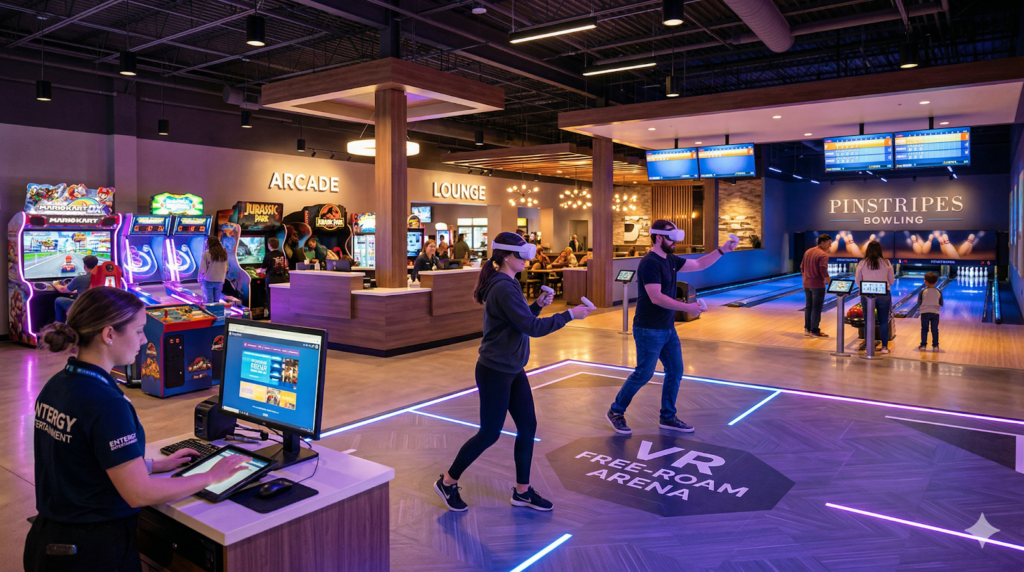
If you already run an FEC, escape room, bowling alley, laser tag venue, trampoline park, or other entertainment business, adding VR is less about starting a new business and more about expanding a venue you already know how to operate. The real question in 2026 is not whether VR is exciting; it is which VR format fits your floor, your audience, and your operating model. Existing venues are well positioned to add VR because they already have one of the hardest parts solved: footfall. The strongest opportunities usually come from operators who want a premium add-on attraction, a group booking product, or a new way to use underutilized space without rebuilding the entire venue. Why existing venues add VR in 2026 Location-based entertainment continues to expand, and the category remains attractive because people still pay for social, immersive, and repeatable experiences outside the home. For operators, that matters more than headset specs or consumer VR trends. The venues that win are the ones that turn VR into a product people can book, share, and repeat. That is why VR is showing up inside FECs, escape rooms, and multi-attraction venues rather than only in standalone arcades. In 2026, VR is best treated as part of a broader attraction mix, not as a separate business model. Who buys out-of-home VR Out-of-home VR is usually bought by people who want a shared experience, not by someone looking to replace their home headset. The clearest audience is teens, young adults, Millennials, and Gen Z guests who are already spending on social entertainment, birthday outings, or competitive group activities. For operators, that means VR should be positioned as a destination attraction, a premium booking, or a repeatable group product. It performs best when it feels social, easy to understand, and different from what guests can already do at home. Best VR formats Room-scale VR is the easiest entry point for many venues because it works in a smaller footprint and supports short sessions with simple operations. It is a strong fit for FECs, escape rooms, and venues that want to test demand before committing to a larger build. Free-roam VR is growing because it cannot be easily replicated at home. Unlike consumer VR, it is designed for shared, out-of-home group play and is often supported by commercial-only content, making it a strong fit for venues that want a premium attraction. Seated or simulation VR works best when space is tight and you want a smaller-footprint attraction that can still generate incremental revenue. It is often the simplest way to introduce VR without major operational changes. Where VR fits best FECs are often the most natural fit because they already combine multiple attractions and can use VR as another revenue stream or underused-space solution. VR also fits well when the venue wants to attract older kids, teens, and adults without changing its core business. Escape room operators are another strong fit because the audience already understands timed, immersive, group-based play. VR escape rooms are especially effective when you want to add new themes, more replayability, or an experience that does not require physical room resets. Bowling alleys, laser tag venues, and trampoline parks tend to do well when they add VR as a premium booking or a low-footprint attraction rather than trying to make it the only reason to visit. In these venues, VR works best when it adds variety and increases dwell time. What to decide first Before buying hardware, operators should decide how much space they can dedicate, what kind of group they want to attract, and whether the attraction needs to run as walk-up traffic or bookable sessions. That decision usually determines whether room-scale, free-roam, or seated VR is the right model. The next question is content, because commercial VR is not just about devices; it is about having a licensed library that fits your audience and your throughput needs. A good operator platform should make session management, fleet control, and content access simple rather than adding more complexity to the floor. How SynthesisVR fits SynthesisVR is built for venue operators that need VR management software, commercial content licensing, and support for PCVR, standalone, room-scale, and free-roam formats in one system. For an existing venue, that matters because the goal is not just to install headsets; it is to manage sessions, content, and fleet operations in a way that fits the rest of the business. If you are adding VR to an existing venue in 2026, the winning approach is the one that integrates cleanly into your operation, creates a clear guest experience, and gives you a repeatable reason for customers to come back. Practical takeaway for operators The best VR additions are usually not the most complicated ones. They are the ones that match the venue’s current audience, fit the available space, and create an obvious reason to book. If your venue already sells group entertainment, VR can become one of the most efficient ways to increase dwell time, expand your attraction mix, and add a premium experience without changing the core identity of the business.
VR Commercial Licensing Explained: What Every New Operator Needs to Know
We have spent years watching venues discover commercial licensing later than they should, sometimes after scaling to multiple locations, sometimes after a developer reaches out, sometimes never. Most venues running consumer game builds commercially never face direct consequences. Enforcement in this industry is sparse, and small development studios rarely have the resources to track down unlicensed venues. The reason to license properly is not the threat of getting caught. The content you run your business on was built by developers who depend on fair compensation to keep building. Venues that license correctly get updates, new releases, and a content relationship that unlicensed venues simply do not have access to. The ecosystem only works if the people benefiting from it choose to participate in it. Why Commercial Licensing Exists When a developer publishes a VR game for home use, the consumer license covers one person playing on their own headset. It does not cover a business running that game across multiple stations for paying customers, day after day. Location-based entertainment venues occupy a different commercial category. A single title might generate thousands of hours of revenue for a venue over its lifetime. Consumer licenses are priced on the assumption of personal use, commercial use requires a separate agreement that reflects the actual value the content delivers in a venue context. Running consumer builds commercially leaves developers uncompensated for how their work is actually being used. The commercial licensing system exists to make the relationship between operators and developers sustainable for both sides. This is not a grey area. Running consumer game builds commercially puts a venue at legal risk and leaves developers uncompensated for commercial use of their work. The commercial licensing system exists to make the relationship between operators and developers sustainable for both sides. SynthesisVR was built inside a VR arcade in 2016, at a time when no commercial licensing infrastructure existed for the industry. The platform was created specifically to solve this, connecting operators to developers through a transparent, scalable licensing system that handles rights, tracking, and billing automatically. How It Works on SynthesisVR Every operator starts with Essential Access: our free tier that gives you full access to the platform so you can run the system, vet workflows, and test games before you spend a cent. New Essential Access accounts also include $250 in software credit, which you can use toward platform add-ons and features, a fast way to try premium tools without upfront cost. Try a game instantly. From the dashboard you can select a Free Test, subscribe, install, and run the title with your players, it’s that easy. Test game performance, session length, throughput, and guest feedback under real conditions; if it doesn’t fit your floor you can stop the test with zero cost and no obligation. When you’re ready to go live, SynthesisVR supports flexible commercial licensing to match your business model: from pay-per-minute, pay-per-session, credits, and fixed concurrent-seat licenses. Your usage is tracked automatically and shown in your dashboard, and you can quickly choose the billing option that fits your venue. After testing, simply enable the license or add credit in the dashboard and start operating without friction: no complicated setup, no surprise fees. The Licensing Models SynthesisVR offers flexible licensing across pre-paid and post-paid structures. Most operators use a combination rather than a single model. Pay Per Minute is the default starting point for most venues. Billing runs automatically based on actual game time, the session starts when the game launches and stops when it ends. No upfront commitment, no fixed monthly cost. Ideal for venues with variable session lengths or operators still building out their content library. PPM fees are billed monthly based on the previous month’s usage. For venues with more predictable operations, the pre-paid modes offer greater cost control: Fixed Station Fee covers a single station at a flat monthly rate, regardless of how many titles you run on it or how long sessions last. Best for dedicated setups where hardware runs consistently. Fixed Location Fee covers your entire venue at one flat rate, up to the maximum number of stations a game supports. Simpler billing for multi-station venues running high volume. Location licenses can include exclusivity options so your venue stands out in a crowded market. Lifetime License is a one-time purchase granting permanent access to a title on a per-station basis. A strong option for proven titles with lasting appeal that form the core of your content lineup. Event License covers short-term activations, useful for expos, trade shows, or pop-up venues where you need commercial access for a defined window. Game Credits let you preload a balance and draw from it as you license new titles, giving you flexible, on-demand access without committing to a specific model upfront. Most successful venues combine models. PPM works well alongside Fixed Station or Fixed Location, covering your core titles on a fixed basis while keeping flexibility for newer or seasonal content. Choosing the Right Model New operators starting out: PPM is the lowest-risk entry point. No upfront commitment, automatic billing, and full access to the content library once you add your initial $100 Game Licenses balance. Established venues with consistent throughput: Fixed Station or Fixed Location fees give you predictable monthly costs and remove per-minute tracking from your operational overhead. Venues with proven cornerstone titles: Lifetime licensing locks in permanent access with no recurring cost. Worth evaluating once you have clear data on which titles your audience returns for. Events and short-term activations: Event License covers the window you need without a long-term commitment. For a full breakdown of how the balance and billing system works, the SynthesisVR knowledge base covers it step by step: https://deployreality.com/community/synthesisvr/main/knowledge-base/content-licensing The Bigger Picture Commercial licensing is the foundation of a content library your venue can build on. Developers who see consistent, fairly compensated usage on a platform invest in maintaining and expanding their titles. Operators who work within the licensing system get access to updates, new releases, and developer relationships that unlicensed venues
Week 8: Launching Games Without Breaking the Flow
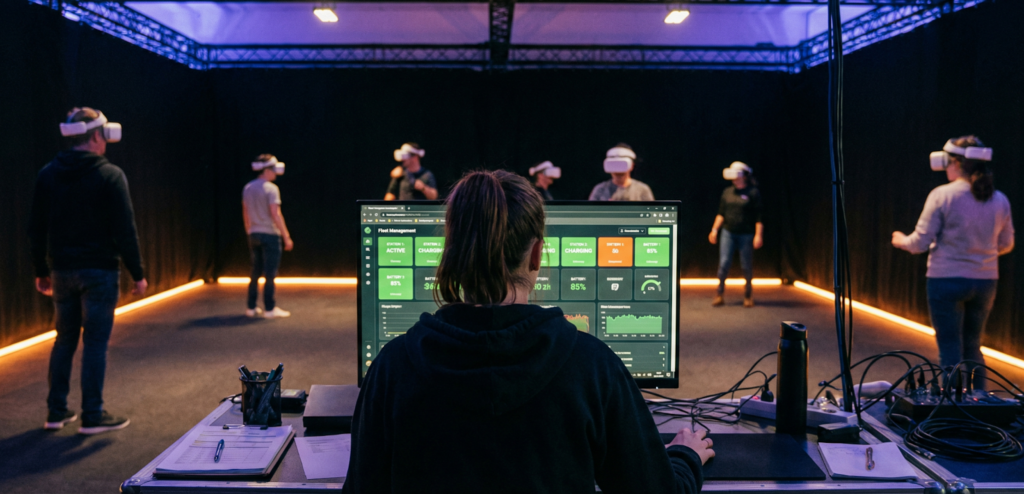
Part of the series: From First Headset to Fully Operational VR Arena Week 7 covered how calibration drift quietly erodes session quality over time and how a stable spatial map removes the problem from your daily routine. Week 8 moves to the next constraint on throughput: the moment between groups, when the physical space is clear but the session still has not started. For many free roam venues, that gap is longer than it needs to be. Why the Launch Matters More Than the Game We have spent years watching venues lose time not to hardware and not to content, but to the launch itself. Staff moving through headsets one by one, putting each on to find the right title and confirm the session. A device that did not get the right session queued. One player watching a menu while five others are already moving through the arena. These are not exceptional circumstances. They are the default outcome of a manual process running against a multi-headset free roam fleet during a busy Saturday. The time lost compounds. A venue running six to eight sessions a day does not just lose those minutes once. It loses them every group, every turnaround, across the whole operating week. And because the launch is a staff-dependent step, its length varies. An experienced operator runs it faster. A new hire runs it slower. On a day when your best person calls in sick, the gap between those two shows up directly in throughput. Customers do not remember the delay in minutes. They remember what it looked like. A staff member visibly troubleshooting at the edge of the play space while a group stands waiting in headsets is the image that stays with people. The experience starts before the game does, and that part is entirely within your control. The Cost of Headset-Side Menus In a free roam arena, launching a game from inside the headset means putting on each device, navigating to the right title, and confirming the session, one headset at a time, across a fleet that might be six, eight, or ten units per group. Each step takes a moment. Across dozens of sessions a day, those moments become a measurable part of operational workload. During peak hours, the repetition increases the chance of a missed step. There is a staffing dimension that deserves more attention. The LBE industry runs structurally lean. Ben Davenport, CEO of VRsenal, put it plainly in a VIVE Business industry report: “Everybody’s chronically understaffed. A lot of places that have staffed VR systems are literally having those systems sit idle because they cannot get people to operate them.” It is a pattern operators acknowledge openly. When your launch process depends on experienced staff executing the same sequence every time, you have built operational fragility directly into your busiest hours. Training a new team member to match the speed of an experienced one takes longer than most venues expect. When that person leaves, the gap shows up in session turnaround times before anything else does. How Automation Changes the Equation The shift from manual to centralised launch changes more than speed. In free roam, every player in the arena needs to enter the experience simultaneously. A partial launch, where some headsets are in the game and others are still on a menu, is not just an efficiency problem. A player still navigating a headset menu while others are already moving through a shared physical space creates a real safety risk. Staff attention split across multiple devices during a launch is attention that is not on the arena floor. Centralised launch removes that split. When a single command sends the correct game to every headset at once, the staff-to-session ratio changes. One operator manages the full fleet from a dashboard, stepping in only when something actually needs attention. David Bardos, CEO of Univrse, framed the industry challenge directly in a 2026 analysis of free roam infrastructure: what scales free roam as a format is not the quality of individual experiences alone. It is operational reliability at the session level, repeated cleanly across every group, every day. Solving it on a one-off basis can produce great experiences, but it rarely produces a scalable operation. The revenue implication is direct. Free roam sessions for groups of six to eight players at standard LBE pricing generate significant revenue per slot. Every ten minutes of lost capacity, repeated across a full operating day, compounds into real lost revenue by the end of the week. Venues that tracked session completion rates and reset times against their workflows found operational stability, not headline hardware specs, was the variable separating profitable locations from one that felt perpetually squeezed. Why “One-Click” Is a Philosophy, Not a Feature The phrase gets used as product shorthand, but what it describes is an approach to operations. Every manual step in a venue workflow is a variable. Variables produce inconsistency. Inconsistency erodes both throughput and guest experience over time. “One-click launch” means the complexity of coordinating a multi-headset session sits with the system, not distributed across individual staff actions. Whether the implementation is literally one button or a short configured sequence, the logic is the same: the human decision point is the session itself, not the mechanics of starting it. Game Presets extend this further. A preset stores a complete launch configuration, game title, player count, game mode, difficulty, session settings and makes it reusable instantly. Staff select the preset and the session launches with the intended setup already applied. The experience sold to the customer matches the experience delivered. Groups get identical gameplay across visits. Multi-station launches stay synchronised. Small configuration differences that staff may not notice become obvious to players; presets eliminate them. Venues that run operations around this logic report a consistent pattern. New staff reach operational competence faster because fewer steps require memorisation or experience. Peak hours run closer to theoretical capacity. The mental load on team members during busy periods drops, which has measurable effects on
The Silent Brain: Why Your VR Arcade Can’t Live Without the SynthesisVR Proxy
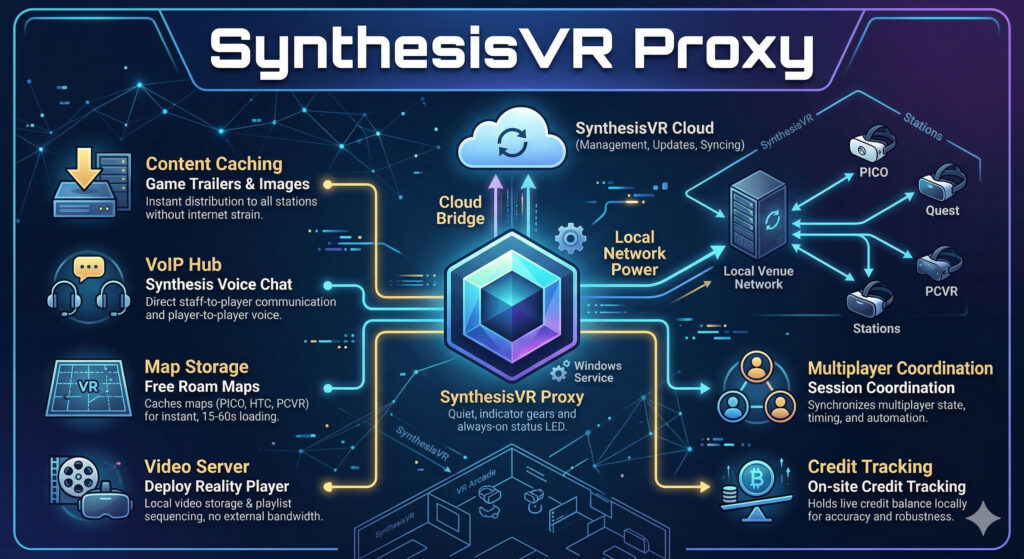
Every successful VR venue has a “silent operator” working behind the scenes. It doesn’t have a flashy UI, and most of your staff will never even click its icon, yet it is the single most important factor in your daily uptime. We are talking about the SynthesisVR Proxy: the local “brain” that bridges the gap between cloud-based management and your on-site hardware. While many operators spend weeks debating the upfront costs of Meta Quest vs. PICO 4 Ultra Enterprise, the reality is that your choice of local infrastructure is what actually dictates your long-term margins. Whether you are running a high-throughput Free Roam arena or a standard arcade, the Proxy is what ensures your maps load in seconds and your sessions stay synced even if the internet fails. What is an edge-cloud service and why does it matter? SynthesisVR is built on what is called an edge-cloud architecture. In plain terms: your venue keeps its own local copy of the data it needs to run (that is the “edge” part), while staying connected to the cloud for management, updates, and syncing. The proxy is what makes this possible. It sits on one computer at your venue, a Windows PC, running silently as a background service and acts as the bridge between SynthesisVR’s cloud infrastructure and everything running on your local network. When this design was first built into SynthesisVR, edge-cloud was considered an unusual approach. Today it is widely regarded as best practice, precisely because it solves a problem every venue operator eventually faces: what happens when the internet connection drops, slows down, or becomes unreliable mid-session. With the proxy handling local communication, your venue keeps running. What the proxy is actually doing right now Most operators assume the proxy just handles basic connectivity. Here is what it is actually doing at your venue. Content delivery, without touching your internet Every time a new game trailer or image is added to the SynthesisVR platform, your stations do not download it directly from the internet. The proxy fetches and caches that data locally first. Then each station pulls it from the proxy. This means a new trailer gets distributed to every station on your network almost instantly, without each station making its own external download request. Faster, cleaner, and easier on your connection. A built-in voice communication hub The proxy includes a built-in VoIP central (Voice over IP, the same technology behind apps like WhatsApp calls). This powers the Synthesis Voice Chat app, which lets all players in a session talk to each other regardless of which game they are playing. More usefully for operators: it also lets staff talk directly to players mid-session, even when the game itself has no voice support. If a player needs help, you can reach them without interrupting the experience. Free roam map storage, loaded in seconds For free roam setups using PICO, HTC Focus, or PCVR, the proxy caches all arena map data locally. Switching maps takes between 15 and 60 seconds. Without local caching, the same process depends entirely on your internet speed and can take several minutes. For a venue running back-to-back sessions, that difference adds up quickly. Video Vault and playlist sequencing The proxy also functions as a video server for venues using the Deploy Reality Player. Videos can be uploaded through Local Manager and stored on the proxy, then distributed to headsets without any external download. These videos can be arranged into playlists, so a 15-minute experience made up of three different videos plays through automatically, with no manual intervention between clips. A Santa’s Sleigh Ride or a multi-chapter tour experience runs itself. Session coordination for multiplayer games When a Synthesis-optimised game launches across multiple stations, those stations need to agree on timing, state, and automation. All of that coordination data flows through the proxy. It acts as the central hub for that communication, keeping every station in sync throughout the session. The Proxy handles the heavy lifting of multiplayer timing so you don’t have to. Ready to see it in action? Explore our library of Synthesis-optimized multiplayer games to find your next big hit. Credit tracking, on-site and accurate For venues on credit-based subscriptions, the proxy holds the live credit balance locally. When a session starts, the station tells the proxy how many credits to reserve. When the session closes, the final charge is confirmed and the balance updates. If something interrupts that process, a power cut, a SteamVR crash, the proxy and cloud may temporarily show different numbers. A manual sync option in Local Manager resolves this instantly, and the proxy auto-syncs with the cloud every 30 to 60 minutes regardless. The setup mistakes worth knowing about The proxy works best when it is set up correctly from the start. A few things that catch operators out: The proxy and stations must be on the same network. If your venue has multiple subnets, say, different floors each with their own network, stations on a different subnet cannot reach the proxy. The fix is to install the proxy on a PC connected to the main network switch, so everything on-site can reach it from one place. WiFi is fine for small setups, Ethernet is better for larger ones. The proxy does not move large amounts of data, but it does handle constant communication between stations. For venues with up to four or five stations, a WiFi-connected PC is usually fine. For larger setups, a wired Ethernet connection removes any risk of network latency affecting the session experience. One proxy per venue. SynthesisVR now checks for an existing proxy before allowing a new installation, so duplicate installs are rare, but worth knowing. One location, one proxy. The most common issue is a Windows account conflict. When the proxy installs, it creates a background Windows service account. If third-party software on the same machine interferes with that account, the proxy stops working. The most common cause is documented in the SynthesisVR knowledge base with a straightforward fix. Checking your proxy
Week 7: Mapping and Calibration: Ending the Drift Problem
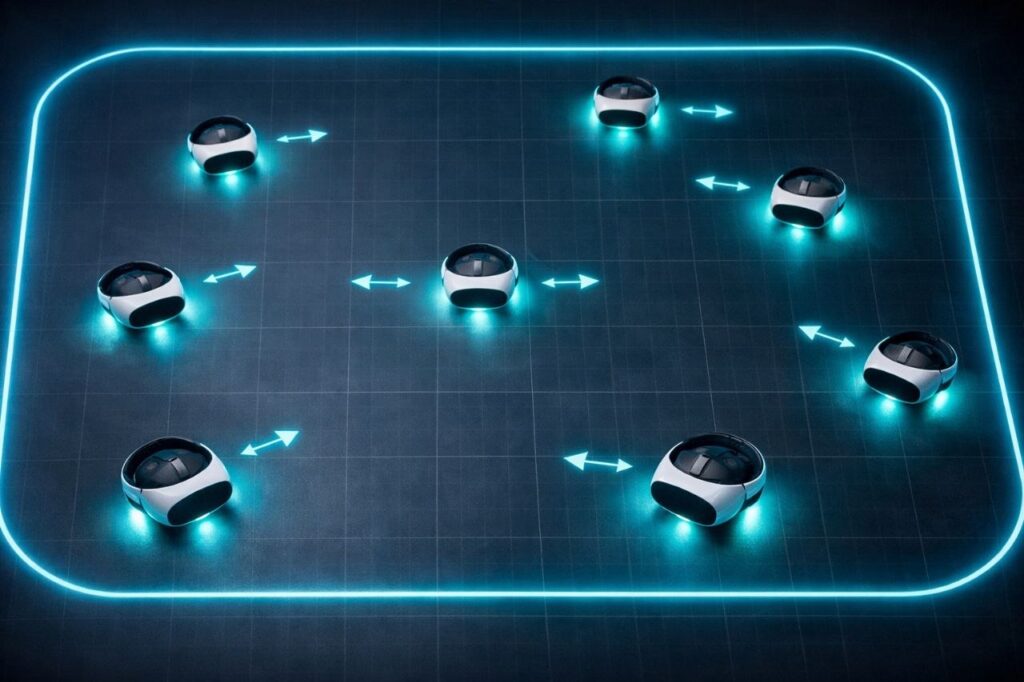
Week 6 covered why network failures in free roam VR are almost always misdiagnosed as tracking problems. Week 6.5, the implementation companion, went deeper into the architecture behind a correctly configured venue network: the wired backbone, VLAN separation, access point count by setup type, and the specific configuration decisions that determine whether sessions hold under real operational pressure. If you have not read it yet, it is worth doing before this one. The two articles sit in the same layer of the operational stack. Week 7 moves one step closer to the headset itself. Calibration drift is one of the most misunderstood problems in free roam VR, and one of the most operationally expensive. It rarely announces itself dramatically. It compounds quietly, session by session, until staff are recalibrating every morning as a matter of routine, without realising that routine is costing them hours of productive time every day. Every standalone VR headset running free roam uses a tracking method called visual simultaneous localisation and mapping, or vSLAM. The headset’s outward-facing cameras scan the surrounding environment and build a spatial map of the space. As the player moves, the system continuously compares what the cameras currently see against that stored map to estimate the headset’s position. Combined with data from onboard inertial measurement units, accelerometers and gyroscopes, the system produces the six-degrees-of-freedom positional data the game uses to place the player in the virtual environment. The process is remarkably effective in stable, well-configured spaces. The problem is that it depends on the environment remaining consistent. Lighting changes, reflective surfaces, uniform walls with few distinguishable features any of these degrade the quality of the visual map the headset can build. When the map degrades, the headset’s estimated position drifts from its actual position in the physical space. Published research on co-located SLAM tracking confirms that even small positional errors between headsets, mismatches between where a player actually is and where the system thinks they are, can create safety risks in shared physical spaces. In a single-player setup, minor drift is usually invisible. In a multi-player free roam arena with six or eight players moving simultaneously, small errors between headsets translate directly into players colliding with each other or with physical obstacles they cannot see. Drift does not require dramatic environmental change to appear. Practical testing across Meta Quest, PS VR2, and SteamVR systems has found that abrupt changes in daylight, a smudge on a single headset camera, or furniture moved near the boundary can shift a virtual grid within minutes of a session starting. In a venue running back-to-back groups throughout the day, this accumulates. There is also a network dimension to what operators experience as drift. Week 6.5 covers the latency requirements of PCVR streaming in detail, a headset running at 72 frames per second needs a new frame every 14 milliseconds, and total round-trip latency above 30 to 35 milliseconds produces visible judder. In a hybrid venue where PCVR streaming and standalone free roam run simultaneously, what presents as a positional mismatch mid-session can originate from either layer. This is why diagnosing the source accurately matters before reaching for a recalibration that will not solve a network problem. Why Re-Mapping Every Morning Kills Throughput The most common operator response to drift is recalibration. When something feels off, staff remap. When a new staff member sets up for the day, they remap. When a headset restarts after a firmware update, they remap. Over time this becomes a daily routine, an accepted cost of running the operation. What most operators do not quantify is what that routine actually costs. Consumer-grade headsets can require up to 30 minutes of morning calibration per unit due to manual sync requirements, plus up to 15 additional minutes of ongoing drift and boundary troubleshooting throughout the day. On a 10-headset fleet running 365 days a year with staff at $20 per hour, that maintenance labour figure adds up to a number that rarely appears anywhere in the original business plan but shows up every month in the actual numbers. The problem runs deeper than time. Consumer headsets cannot share boundary maps. Each device builds and maintains its own independent spatial map. When a headset is turned off and back on, or when a different staff member puts it on and walks to a slightly different starting position, the coordinate space shifts. The result across a multi-headset fleet is that every device is operating from a slightly different understanding of where the play area is. Players can be perfectly aligned in the virtual world from their individual perspectives while physically moving in ways the game never intended. The SynthesisVR knowledge base documents this directly: the Quest headset does not remember the previous player orientation after power cycling. Staff working around this problem manually mark starting positions on the floor and require every operator to wear each headset individually from the same marked spot, facing the same direction, before each session. That workflow is a symptom of a system not designed for commercial operation. The parallel with networking is direct. Week 6.5 makes the same point about consumer mesh WiFi systems, they may appear to work during low-load testing and fail under peak session density. Consumer headsets present the same dynamic in the calibration layer: stable in single-player testing, unreliable at scale. PICO Boundary Sharing and Multi-Player Alignment Enterprise headsets solve this at the operating system level. On the PICO 4 Ultra Enterprise, boundary sharing means the map created on one headset becomes the map for every headset in the fleet. The coordinate space is shared. Every device localises against the same spatial reference. Players’ virtual positions correspond accurately to their physical positions relative to each other. HTC documented the same capability for the VIVE Focus 3 when they introduced map sharing for LBE customers: it allows multiple users to operate accurate co-location tracking in a shared space without having to individually set up or calibrate each headset. All headsets work from a single ground truth for
Week 6.5: Networking for VR Venues: What You Need to Know Before You Build
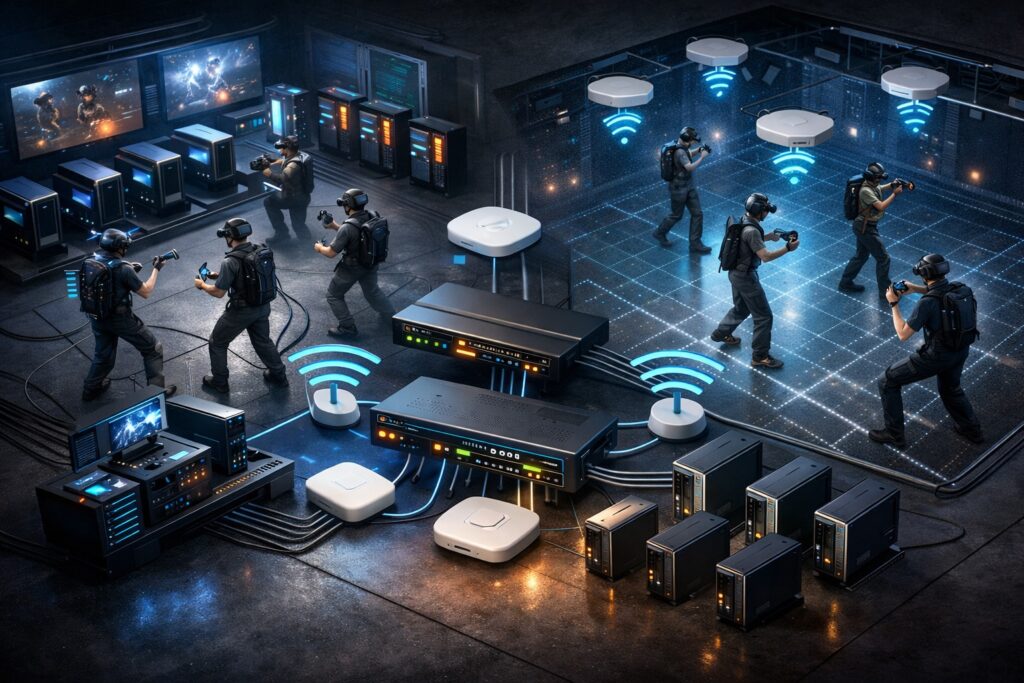
Week 6 covered why network failures in free roam VR are almost always misdiagnosed, operators blame tracking or headsets when the real cause is a packet dropped at the wrong moment, a headset stuck to a distant access point, or a guest phone competing for the same spectrum as a live PCVR stream. This article is the practical follow-up: not the theory of why networks fail, but what a network built for real VR operations actually looks like and the decisions that determine whether it holds under load. PCVR and Standalone Are Not the Same Network Problem The most important thing to understand before specifying any hardware is that PCVR wireless streaming and standalone free roam place fundamentally different demands on your network. Treating them the same way is one of the most consistent setup mistakes in LBE VR. Factor PCVR (Wireless Streaming) Standalone What WiFi carries Full rendered video frames Session sync and game state only Bandwidth demand 100–700+ Mbps per headset Very low Primary network concern Throughput and low latency Latency, jitter, roaming Headsets per AP (practical) 2–3 maximum Higher — but stability still critical PC connection Wired Ethernet — non-negotiable Not applicable In a PCVR setup, every rendered frame travels from the PC to the headset over WiFi in real time. This makes the connection extremely bandwidth-intensive and latency-sensitive simultaneously. The PC itself must be connected via wired Ethernet: this is non-negotiable. Any wireless hop on the PC side compounds the problem in ways that cannot be fixed downstream. Standalone headsets render locally. WiFi carries session coordination data, small packets, not video streams. The bandwidth requirement is a fraction of PCVR, but the network still needs to be low-jitter and roaming-stable. Packet loss causes player desync. Poor roaming causes mid-session freezes. In a hybrid venue running both formats, the PCVR load sets the floor for access point count and channel planning. LAN First, WiFi Second Most operators think about networking in terms of WiFi. The wired backbone: the cables, switch, and router connecting everything together, receives far less attention, and in PCVR environments especially, it is where the most consequential decisions get made. Every PC running PCVR content must connect to the switch via Cat 6 or Cat 6A Ethernet. The switch distributes wired connections to gaming PCs and powers ceiling-mounted access points via PoE (Power over Ethernet) through a single cable run. For PCVR-heavy deployments, multi-Gigabit switch ports and corresponding network cards in the PCs are increasingly important, a standard Gigabit connection has limited headroom when PCVR streams push toward 500–700 Mbps per headset. Think of LAN as the highway. WiFi is the on-ramp. If the highway is congested or slow, the speed of the on-ramp does not matter. The Four Decisions That Determine Network Quality 1. Traffic Separation (VLANs) Headset traffic, staff systems, and guest WiFi must operate on separate network segments. A guest streaming video should never compete for the same resources as a live PCVR session. VLAN separation is the mechanism that prevents this, and it requires a managed switch and router, not consumer hardware. 2. Band and Channel Configuration Headsets should operate on the 6 GHz band (WiFi 6E minimum, WiFi 7 preferred for PICO 4 Ultra Enterprise). The 2.4 GHz band should be disabled entirely on the headset network. Channels should be manually assigned, auto channel selection between access points creates interference that is difficult to diagnose. 3. Roaming Configuration Three protocols: 802.11k, 802.11v, and 802.11r, must be enabled across all access points. Without them, headsets hold connections to whichever access point they first connected to, regardless of where the player moves. The result shows up as lag spikes and position jumps mid-session, symptoms that will be reported as tracking problems. 4. Access Point Count and Placement More access points at lower transmit power consistently outperforms fewer access points running at high power. High power causes sticky client behaviour. For PCVR, a practical ceiling of 2 to 3 headsets per access point means a 10-headset wireless PCVR venue needs 4 to 5 correctly placed APs. Standalone venues can support more headsets per AP, but placement based on actual player movement patterns, not cable convenience, still determines session consistency. What Consumer Hardware Cannot Do Consumer routers and mesh WiFi systems, including high-end gaming models, lack the VLAN management, roaming protocol configuration, and per-client control that multi-headset VR operations require. They may appear stable in single-headset testing and fail under peak session load. The apparent hardware saving on day one creates operational costs that consistently exceed the price difference over time. Enterprise or business-grade managed access points, a managed PoE switch, and a business-grade router are the baseline for any venue running more than four or five headsets. This does not mean the most expensive option, it means hardware that supports the configuration depth a commercial VR operation actually needs. The Case for a Networking Professional Knowing what a correctly configured VR network looks like and being able to achieve it in a specific physical space are two different problems. The configuration work, access point placement based on actual signal measurements, channel planning that accounts for neighbouring networks, roaming threshold tuning, VLAN architecture, requires someone physically in the space with the right tools. Venues that invest in a qualified networking professional at the outset avoid the majority of the failure patterns described in Week 6. It is a one-time cost. The return is measured in sessions that run without the network-sourced disruptions that erode guest experience and drive up staff workload. Want the full implementation guide?The complete Week 6.5 article covers every layer of the network in detail: wired backbone design, VLAN architecture, AP count by setup type, the full PCVR streaming chain, hardware selection criteria, and a checklist of the most common configuration mistakes. It is a practical implementation reference built for operators who are setting up or upgrading a free roam venue.Reach out to us at info@synthesisvr.com and we will send it directly to your inbox. SynthesisVR is trusted by