
How VR Arcades and FECs Can Plan Their Seasonal Marketing Calendar
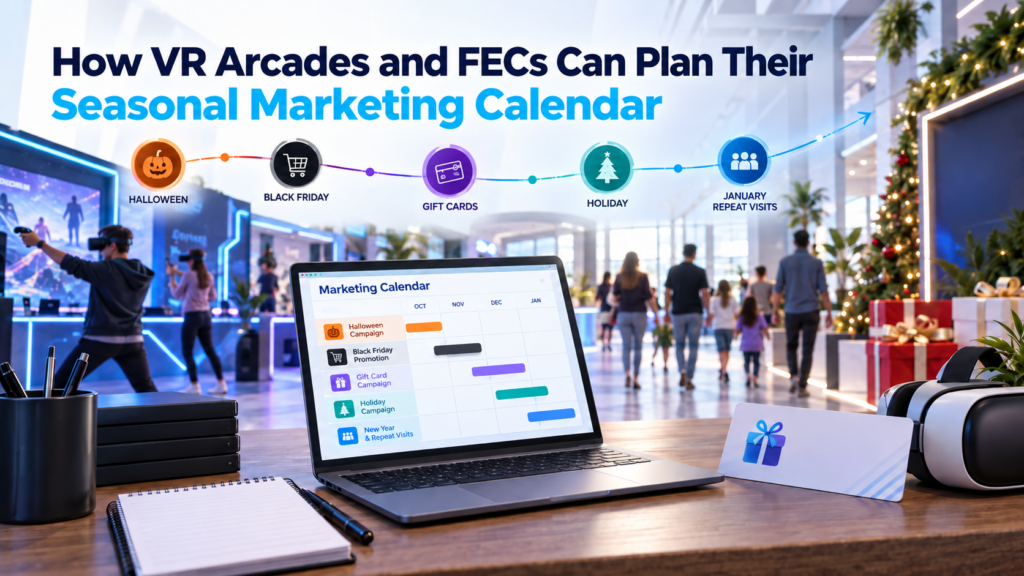
Seasonal marketing for VR arcades works best when the calendar tells the team more than what to post next. A useful seasonal marketing calendar should show who the venue wants to reach, what behavior the campaign should create, which offer fits that audience, how operations will deliver it, and what should happen after the visit. That matters because Halloween, Black Friday, Christmas, school breaks, corporate party season, and January do not create the same type of demand. A campaign that works for families during a school holiday may have little relevance to a corporate organizer planning a December event or somebody buying a VR experience as a Christmas gift. For VR arcades and family entertainment centers, there is another layer. The experience itself can change. Operators can rotate content, feature different multiplayer experiences, build seasonal packages, run competitions, and adapt the attraction mix without rebuilding the venue around every campaign. The result is a marketing calendar that connects customer demand with what the venue can actually deliver. Start with the moments that change customer behavior A seasonal calendar does not have to begin with a list of holidays. Start with the periods when the behavior of your customers changes. School breaks create family availability. Halloween creates demand for themed entertainment. November introduces holiday shopping and Black Friday. December can bring corporate parties, gift buying, visiting families, and school vacations. January may bring quieter general traffic alongside customers redeeming gifts they received during the holidays. Even the customer’s planning window can begin surprisingly early. The National Retail Federation reported that by early August 2026, one-quarter of consumers surveyed had already purchased at least one Halloween item. (National Retail Federation) For a physical entertainment venue, the relevant calendar also depends on its local market. A tourist destination, suburban family entertainment center, university-town arcade, and city-center VR venue can experience very different demand patterns. Bob Phibbs, The Retail Doctor, makes a related point in his guidance for seasonal brick-and-mortar businesses: seasonal demand is often connected to the occasion behind the purchase, including gifting and travel, rather than simply the date printed on the calendar. (Retail Doc) Before filling the calendar with promotions, operators should therefore ask: What changes in our customers’ lives during this period that gives them a reason to visit us? That question usually produces a better campaign than beginning with, “What should we post for Halloween?” Give every seasonal campaign one commercial job Seasonality creates attention. The venue still needs to decide what it wants that attention to accomplish. A Halloween campaign might exist to increase evening bookings among teens and young adults. A corporate Christmas campaign could target higher-value group reservations. A Black Friday offer might generate advance revenue through gift cards. A January campaign could encourage people who visited or received a gift during December to come back. This connects with the pricing framework we explored in our guide to VR arcade session prices, packages, and promotions. A promotion works better when the operator defines the behavior it should create before choosing the discount or package. A simple seasonal campaign might therefore have a goal such as: This also makes measurement easier. The operator already knows what success should look like before the campaign launches. Build each promotion around four connected layers A practical way to plan each seasonal campaign is what we can call the Seasonal Campaign Stack. Every campaign needs four layers: Demand: Who has a reason to visit during this period? Offer: What gives that customer a clear reason to book? Delivery: Can the venue reliably provide the experience being promoted? Follow-up: What should happen after that visit? Consider Halloween. Demand might come from friend groups, families, teenagers, or adults looking for something different to do around October 31. The offer could be a horror VR package, competitive Halloween night, family-friendly spooky session, or themed free-roam experience. Delivery means checking the content, licensing, player capacity, session length, staff briefing, booking flow, and hardware before the promotion goes live. Follow-up could move those customers toward a November event, Christmas gift card, new multiplayer experience, or another reason to return. We covered the package-building side in more depth in How to Build Halloween VR Arcade Packages for Different Audiences. The same four questions can then be reused for Black Friday, Christmas, Valentine’s Day, spring break, summer, back-to-school season, and local events. Choose the audience before choosing the message A venue may have several very different audiences inside the same customer database. A birthday parent, local teenager, tourist, corporate organizer, repeat player, and someone who bought a gift card are all customers. Their reasons for booking are completely different. This is especially important for email marketing. Neil Patel’s current guidance on email personalization emphasizes behavioral and transaction data rather than relying only on basic personalization such as a customer’s name. Segmentation can use previous purchases, engagement, location, behavior, and customer lifecycle stage to make the message more relevant. (Neil Patel) For an entertainment venue, that might mean: We explored this segmentation further in How VR Entertainment Venues Turn First-Time Visitors Into Repeat Customers. This is also why the seasonal calendar and the email calendar should eventually connect. Wednesday’s deeper email-marketing article can build on this part without repeating the whole seasonal strategy. Plan the content calendar with the marketing calendar This is where VR venues have an advantage over many traditional brick-and-mortar businesses. The building may stay exactly the same while the experience customers come to play changes. A horror title can move into the spotlight for Halloween. Competitive multiplayer can support a tournament or social event. Family-friendly experiences can lead during school breaks. Cooperative content may fit corporate or group campaigns. That means operators can plan what they promote and what customers will play at the same time. Our guide to VR arcade content rotation looks at this in more detail. Rotation does not always require licensing something new. Operators can feature an existing title, introduce a leaderboard, run a challenge, change staff recommendations, or bring