
How Family Entertainment Centers Use VR Attractions During Heatwaves and Rainy Days
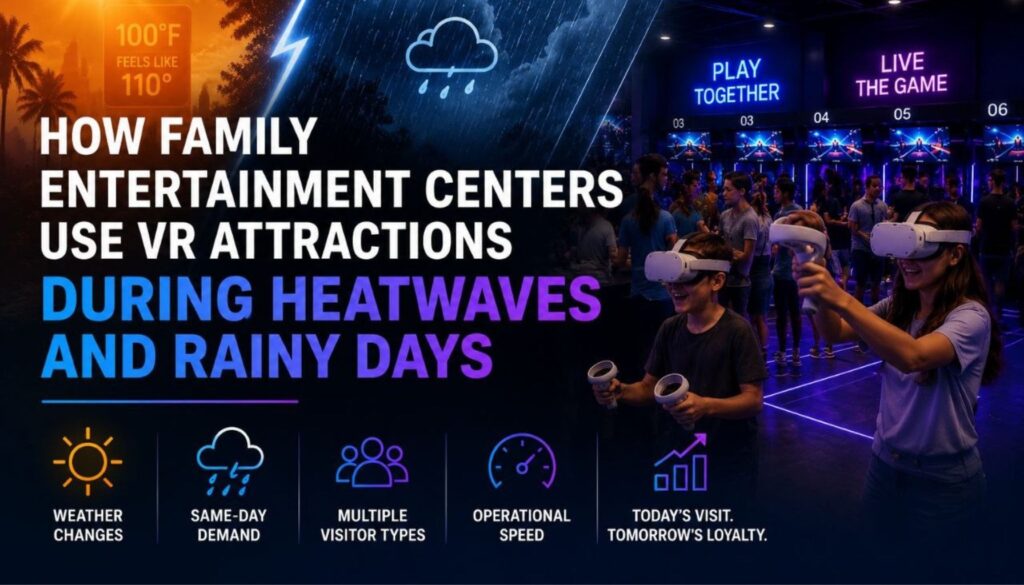
Why Indoor Attractions Benefit When Outdoor Plans Change A heatwave pushes temperatures past what most families will tolerate outdoors. A summer storm cancels afternoon plans. A tourist group abandons the beach and starts searching for something to do indoors. Within a few hours, a quiet weekday turns into one of the busiest periods of the week and the venues that capture that traffic are rarely the loudest marketers. They are the ones that were operationally ready before the weather changed. For VR arcades, family entertainment centers, and location-based entertainment venues, weather-driven demand is some of the highest-intent traffic the season produces. These visitors are actively looking for something to do today. Converting that interest into a booking depends on local visibility, a clear booking journey, and the operational capacity to deliver when multiple groups arrive in a short window. The foundations of local visibility and seasonal positioning are covered in the first article in this series: How VR Arcades Can Adapt to Summer Demand Shifts and Capture More Indoor Entertainment Traffic. Why VR Attractions Benefit When Outdoor Plans Change Extreme weather does not create leisure demand from nothing. It shifts existing demand from one category of venue to another. When heat, rain, or poor air quality makes outdoor activities less appealing, consumers look for indoor alternatives and the family entertainment center sector is one of the primary beneficiaries of that shift. Research on North American FEC market growth consistently shows strong demand for indoor, experience-driven attractions, particularly those that support group participation. This is why FECs frequently combine multiple attractions under one roof. Bowling, arcades, indoor mini golf, karting, laser tag, escape rooms, and VR experiences all compete for the same visitor at the same moment. When outdoor plans collapse, VR arcades sit inside that same consideration set, which makes how the venue presents itself online, and how quickly it can operate when guests arrive, commercially significant. The Same-Day Booking Moment Weather-driven visitors behave differently from planned visitors. A birthday party may be booked weeks in advance. A school group outing may be organized months ahead. A family escaping a heatwave often decides within hours, a tourist dealing with unexpected rain may search for local attractions that afternoon, and a friend group whose outdoor plans fell apart wants an immediate alternative. These visitors are not researching extensively. They want answers: Can we book today? How much does it cost? How many people can play, and for how long? Is it suitable for children? The venue that surfaces that information fastest, with accurate hours and a clear booking path, usually wins the session. Google has increasingly emphasized accurate, specific business information as a core factor in local discoverability, including within AI-powered search results, which raises the cost of having outdated or incomplete listings during demand spikes. Multiple Visitor Types, One Peak Period One of the more common operational mistakes during weather-driven surges is treating the incoming traffic as a single audience. In practice, a busy heatwave afternoon can bring families prioritizing supervision and simplicity, tourists who need an easy-to-understand experience within a tight schedule, teenagers and young adults focused on multiplayer social experiences, and pre-booked birthday parties already on the calendar, all arriving within the same two-hour window. Managing those groups simultaneously is where manual coordination breaks down. Staff who are troubleshooting headsets cannot simultaneously onboard walk-ins. A session running late for one group delays the next group booking. The multiplayer coordination that works smoothly during a planned birthday party can stall under unplanned volume if the workflow depends on individual staff judgment rather than repeatable process. Operational Readiness During Demand Spikes Several venue operators have described the same pattern: strong walk-in traffic during a heatwave, followed by the realization that session launch bottlenecks were limiting how much revenue they could actually capture. Weather creates the demand. Operations determine how much of it converts. A five-minute delay launching a session affects the next booking. A slow headset preparation process reduces throughput during peak hours. When a staff member troubleshoots a hardware issue, every walk-in waiting in the lobby is evaluating whether the venue is worth the wait. The venues that consistently capture weather-driven revenue tend to treat session launch speed, multiplayer coordination, and guest onboarding as operational disciplines rather than ad hoc decisions, the same disciplines that protect throughput and group booking quality throughout the rest of the season. Five Things to Review Before the Next Weather Spike 1. Audit your local listings. Verify operating hours, contact information, photos, and booking links across your Google Business Profile. Inaccurate or incomplete listings cost bookings on the highest-intent days of the season. 2. Simplify the booking journey. Pricing, session length, age recommendations, and group sizes should be visible without requiring visitors to search through multiple pages. Same-day traffic has low patience for friction. 3. Prepare for different visitor profiles. Build recommended experience paths for families, tourist groups, friend groups, and larger parties before demand arrives rather than improvising at the desk. 4. Audit session launch procedures. Map where staff lose time during onboarding, headset preparation, and multiplayer setup. A documented workflow that any team member can follow consistently is the difference between 20-minute and 35-minute session launch cycles. 5. Build a weather response plan. Have marketing assets, social posts, and operational procedures ready in advance. Reacting after a heatwave warning has already been issued leaves less time to capture the most valuable part of the traffic window. From Weather Traffic to Repeat Visits Weather-driven traffic is short-term in nature, but the relationships it creates can last through autumn and beyond. A family that discovers the venue during a rainy weekend can become a future birthday party booking. A tourist group that had a smooth session experience generates reviews and referrals that continue driving organic traffic after the weather changes. The venues that benefit most from these spikes tend to focus on converting the visit into a relationship: capturing contact information, offering a clear return incentive, and delivering a session experience consistent enough
How VR Arcades Can Adapt to Summer Demand Shifts and Capture More Indoor Entertainment Traffic
Most VR arcade operators expect summer to bring more visitors. What many find instead is that summer changes booking behavior more than it changes overall demand. Seasonal patterns vary considerably across commercial VR venues. Tourist destinations often welcome an influx of first-time visitors. Local family entertainment centers may see regulars disappear for holidays. A rainy afternoon can transform a quiet Wednesday into one of the busiest periods of the week with only a few hours’ notice. For VR arcades, FECs, and location-based entertainment venues, marketing your VR arcade effectively in summer comes down to understanding who is likely to visit, how they make booking decisions, and whether the venue is ready to respond when demand shifts without warning. How Summer Actually Changes VR Arcade Marketing and Traffic Summer rarely increases demand evenly. The more common pattern across commercial LBE venues is a reshaping of when and how bookings arrive. Weekend sessions often stay healthy. Weekday utilization becomes harder to predict. Tourist-heavy markets see more first-time visitors, while local venues lose regulars to travel and outdoor activities. These patterns tend to run in parallel rather than canceling each other out, which means operators serving both local and tourist audiences may see strong overall numbers while still struggling with utilization on specific days and sessions. One weekend should not be read as a trend. Summer demand tends to arrive in waves driven by weather, local events, school schedules, and travel patterns, so a strong Saturday tells you less than you might expect about the following week. Operators who plan around consistent utilization rather than occasional spikes tend to manage the season more effectively. Why Heatwaves and Rainy Days Are Your Best Walk-In Opportunities Weather is one of the most reliable same-day demand drivers for indoor entertainment venues, and summer is when that effect is most pronounced. When outdoor plans fall apart, consumers search for alternatives the same day. Operators in family entertainment and attraction sectors have consistently noted that rainy weekends drive stronger attendance than clear-sky holiday weekends in some markets, with outdoor competitors like mini golf and go-karts seeing slower traffic while indoor venues pick up the difference. The mechanism is straightforward: a family with an afternoon free and a change in weather needs an answer quickly. What they search for reflects that urgency. Queries like “indoor activities near me,” “things to do with kids,” “VR arcade near me,” and “rainy day activities” are high-intent searches from people ready to book that day. Venues that answer those searches with clear, practical information, session length, pricing, group size, age suitability, what to expect on arrival, convert that traffic at a higher rate than venues that bury the details. Local SEO visibility and a clean booking page matter more in this moment than any promotional campaign. Summer Visitors Are Not One Audience A family booking a birthday party, a camp coordinator managing forty kids, a tourist couple with two free hours, and a group of friends deciding last-minute what to do on a Friday night all land in the same venue. They found it differently, they need different things, and they make decisions on very different timelines. Operators who recognize these differences can build offers, messaging, and scheduling structures that match the actual booking journey rather than defaulting to one-size promotional language. The booking pattern column in the graphic above is particularly useful for session planning: families plan ahead, camps book in advance to manage logistics, tourists decide same-day, and social groups move on short notice. A venue that can accommodate all four simultaneously, without staff coordination becoming the limiting factor, is in a structurally stronger position than one that handles them well in sequence but struggles when they overlap. Why Local Search Visibility Matters More in Summer Many summer visitors have never heard of your venue before. They find it through Google Search, Google Maps, tourism sites, local directories, and increasingly through AI-powered search results that surface venue recommendations directly in the answer rather than a list of links. Discoverability at that moment depends on two things: whether the venue appears in the results, and whether the listing answers the practical questions quickly enough to convert. Visitors searching for last-minute indoor activities are not browsing. They want session length, pricing, group size limits, and age recommendations without having to dig. Venues that surface that information clearly, in their Google Business Profile, on their booking page, and in their site copy, tend to win that traffic over venues with better attractions but harder-to-navigate information. This is also where structured data and locally relevant page content start to matter for venues that want to compete in AI-assisted search, where the answer shown to a user is often pulled from a single well-organized source rather than ranked links. Platforms like ROLLER, which works with thousands of FEC and attraction operators globally, note that seasonal promotions and clear online booking flows are among the highest-impact changes venues can make before peak periods. What to Review Before Peak Summer Traffic Arrives The checklist below covers three areas operators should audit before the season peaks: booking experience, local visibility, and operational readiness. Small improvements in clarity often create more bookings than additional advertising spend. A pricing page that answers questions without extra clicks, a Google Business Profile updated with current hours and photos, and staff briefed on same-day demand spikes are each lower-cost interventions than a paid campaign, and each one compounds across every visitor who arrives from organic search over the course of a season. Managing the Operational Complexity That Comes With Seasonal Variety On a busy summer day, a VR arcade might run a birthday party in the morning, a summer camp group at midday, tourist walk-ins through the afternoon, and a social multiplayer session in the evening. Each of those groups needs different content, different session structures, and different levels of staff involvement. That variety is manageable when volume is moderate. During weather-driven spikes, when two or three groups arrive within a short window