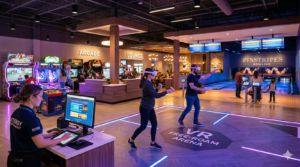
If you already run an FEC, escape room, bowling alley, laser tag venue, trampoline park, or other entertainment business, adding VR is less about starting a new business and more about expanding a venue you already know how to operate. The real question in 2026 is not whether VR is exciting; it is which VR format fits your floor, your audience, and your operating model.
Existing venues are well positioned to add VR because they already have one of the hardest parts solved: footfall. The strongest opportunities usually come from operators who want a premium add-on attraction, a group booking product, or a new way to use underutilized space without rebuilding the entire venue.
Why existing venues add VR in 2026
Location-based entertainment continues to expand, and the category remains attractive because people still pay for social, immersive, and repeatable experiences outside the home. For operators, that matters more than headset specs or consumer VR trends. The venues that win are the ones that turn VR into a product people can book, share, and repeat.
That is why VR is showing up inside FECs, escape rooms, and multi-attraction venues rather than only in standalone arcades. In 2026, VR is best treated as part of a broader attraction mix, not as a separate business model.
Who buys out-of-home VR
Out-of-home VR is usually bought by people who want a shared experience, not by someone looking to replace their home headset. The clearest audience is teens, young adults, Millennials, and Gen Z guests who are already spending on social entertainment, birthday outings, or competitive group activities.
For operators, that means VR should be positioned as a destination attraction, a premium booking, or a repeatable group product. It performs best when it feels social, easy to understand, and different from what guests can already do at home.
Best VR formats
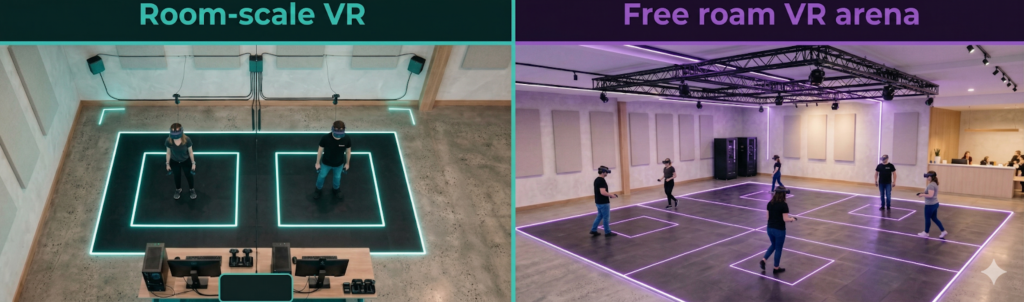
Room-scale VR is the easiest entry point for many venues because it works in a smaller footprint and supports short sessions with simple operations. It is a strong fit for FECs, escape rooms, and venues that want to test demand before committing to a larger build.
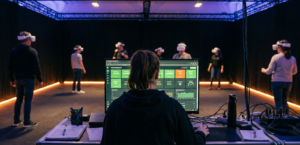
Free-roam VR is growing because it cannot be easily replicated at home. Unlike consumer VR, it is designed for shared, out-of-home group play and is often supported by commercial-only content, making it a strong fit for venues that want a premium attraction.
Seated or simulation VR works best when space is tight and you want a smaller-footprint attraction that can still generate incremental revenue. It is often the simplest way to introduce VR without major operational changes.
Where VR fits best
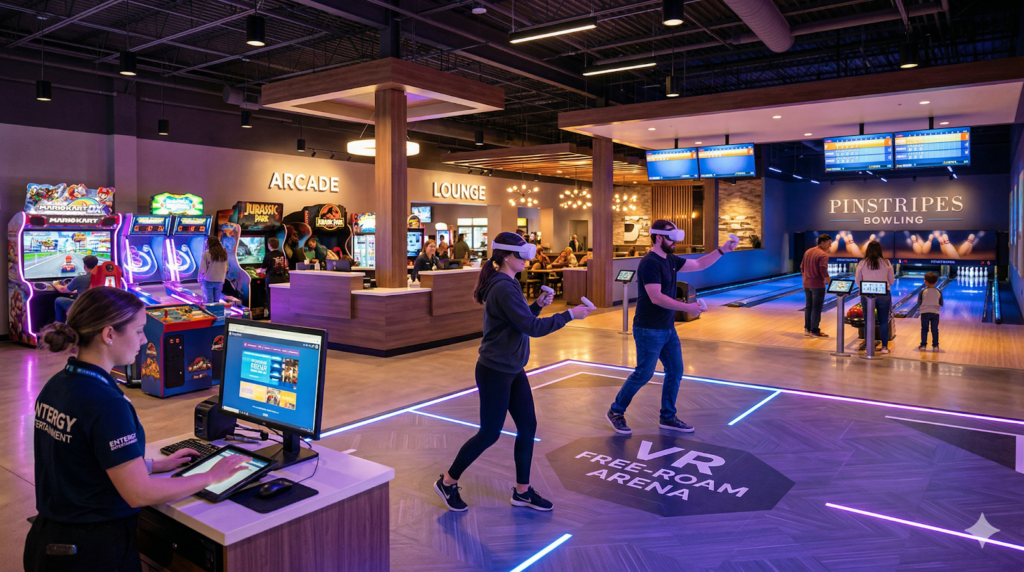
FECs are often the most natural fit because they already combine multiple attractions and can use VR as another revenue stream or underused-space solution. VR also fits well when the venue wants to attract older kids, teens, and adults without changing its core business.
Escape room operators are another strong fit because the audience already understands timed, immersive, group-based play. VR escape rooms are especially effective when you want to add new themes, more replayability, or an experience that does not require physical room resets.
Bowling alleys, laser tag venues, and trampoline parks tend to do well when they add VR as a premium booking or a low-footprint attraction rather than trying to make it the only reason to visit. In these venues, VR works best when it adds variety and increases dwell time.
What to decide first
Before buying hardware, operators should decide how much space they can dedicate, what kind of group they want to attract, and whether the attraction needs to run as walk-up traffic or bookable sessions. That decision usually determines whether room-scale, free-roam, or seated VR is the right model.
The next question is content, because commercial VR is not just about devices; it is about having a licensed library that fits your audience and your throughput needs. A good operator platform should make session management, fleet control, and content access simple rather than adding more complexity to the floor.
How SynthesisVR fits
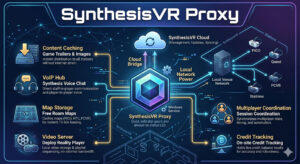
SynthesisVR is built for venue operators that need VR management software, commercial content licensing, and support for PCVR, standalone, room-scale, and free-roam formats in one system. For an existing venue, that matters because the goal is not just to install headsets; it is to manage sessions, content, and fleet operations in a way that fits the rest of the business.
If you are adding VR to an existing venue in 2026, the winning approach is the one that integrates cleanly into your operation, creates a clear guest experience, and gives you a repeatable reason for customers to come back.
Practical takeaway for operators
The best VR additions are usually not the most complicated ones. They are the ones that match the venue’s current audience, fit the available space, and create an obvious reason to book.
If your venue already sells group entertainment, VR can become one of the most efficient ways to increase dwell time, expand your attraction mix, and add a premium experience without changing the core identity of the business.