We have spent years watching venues discover commercial licensing later than they should, sometimes after scaling to multiple locations, sometimes after a developer reaches out, sometimes never. Most venues running consumer game builds commercially never face direct consequences. Enforcement in this industry is sparse, and small development studios rarely have the resources to track down unlicensed venues.
The reason to license properly is not the threat of getting caught. The content you run your business on was built by developers who depend on fair compensation to keep building. Venues that license correctly get updates, new releases, and a content relationship that unlicensed venues simply do not have access to. The ecosystem only works if the people benefiting from it choose to participate in it.
Why Commercial Licensing Exists
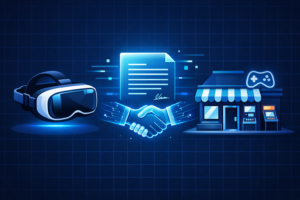
When a developer publishes a VR game for home use, the consumer license covers one person playing on their own headset. It does not cover a business running that game across multiple stations for paying customers, day after day. Location-based entertainment venues occupy a different commercial category. A single title might generate thousands of hours of revenue for a venue over its lifetime. Consumer licenses are priced on the assumption of personal use, commercial use requires a separate agreement that reflects the actual value the content delivers in a venue context.
Running consumer builds commercially leaves developers uncompensated for how their work is actually being used. The commercial licensing system exists to make the relationship between operators and developers sustainable for both sides.
This is not a grey area. Running consumer game builds commercially puts a venue at legal risk and leaves developers uncompensated for commercial use of their work. The commercial licensing system exists to make the relationship between operators and developers sustainable for both sides.
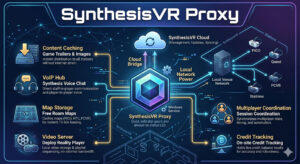
SynthesisVR was built inside a VR arcade in 2016, at a time when no commercial licensing infrastructure existed for the industry. The platform was created specifically to solve this, connecting operators to developers through a transparent, scalable licensing system that handles rights, tracking, and billing automatically.
How It Works on SynthesisVR
Every operator starts with Essential Access: our free tier that gives you full access to the platform so you can run the system, vet workflows, and test games before you spend a cent. New Essential Access accounts also include $250 in software credit, which you can use toward platform add-ons and features, a fast way to try premium tools without upfront cost.
Try a game instantly. From the dashboard you can select a Free Test, subscribe, install, and run the title with your players, it’s that easy. Test game performance, session length, throughput, and guest feedback under real conditions; if it doesn’t fit your floor you can stop the test with zero cost and no obligation.
When you’re ready to go live, SynthesisVR supports flexible commercial licensing to match your business model: from pay-per-minute, pay-per-session, credits, and fixed concurrent-seat licenses. Your usage is tracked automatically and shown in your dashboard, and you can quickly choose the billing option that fits your venue. After testing, simply enable the license or add credit in the dashboard and start operating without friction: no complicated setup, no surprise fees.
The Licensing Models
SynthesisVR offers flexible licensing across pre-paid and post-paid structures. Most operators use a combination rather than a single model.
Pay Per Minute is the default starting point for most venues. Billing runs automatically based on actual game time, the session starts when the game launches and stops when it ends. No upfront commitment, no fixed monthly cost. Ideal for venues with variable session lengths or operators still building out their content library. PPM fees are billed monthly based on the previous month’s usage.
For venues with more predictable operations, the pre-paid modes offer greater cost control:
Fixed Station Fee covers a single station at a flat monthly rate, regardless of how many titles you run on it or how long sessions last. Best for dedicated setups where hardware runs consistently.
Fixed Location Fee covers your entire venue at one flat rate, up to the maximum number of stations a game supports. Simpler billing for multi-station venues running high volume. Location licenses can include exclusivity options so your venue stands out in a crowded market.
Lifetime License is a one-time purchase granting permanent access to a title on a per-station basis. A strong option for proven titles with lasting appeal that form the core of your content lineup.
Event License covers short-term activations, useful for expos, trade shows, or pop-up venues where you need commercial access for a defined window.
Game Credits let you preload a balance and draw from it as you license new titles, giving you flexible, on-demand access without committing to a specific model upfront.
Most successful venues combine models. PPM works well alongside Fixed Station or Fixed Location, covering your core titles on a fixed basis while keeping flexibility for newer or seasonal content.
Choosing the Right Model
New operators starting out: PPM is the lowest-risk entry point. No upfront commitment, automatic billing, and full access to the content library once you add your initial $100 Game Licenses balance.
Established venues with consistent throughput: Fixed Station or Fixed Location fees give you predictable monthly costs and remove per-minute tracking from your operational overhead.
Venues with proven cornerstone titles: Lifetime licensing locks in permanent access with no recurring cost. Worth evaluating once you have clear data on which titles your audience returns for.
Events and short-term activations: Event License covers the window you need without a long-term commitment.
For a full breakdown of how the balance and billing system works, the SynthesisVR knowledge base covers it step by step: https://deployreality.com/community/synthesisvr/main/knowledge-base/content-licensing
The Bigger Picture
Commercial licensing is the foundation of a content library your venue can build on. Developers who see consistent, fairly compensated usage on a platform invest in maintaining and expanding their titles. Operators who work within the licensing system get access to updates, new releases, and developer relationships that unlicensed venues simply do not.
SynthesisVR’s content marketplace now covers 400+ titles across free roam, room scale, standalone, and PCVR formats, built specifically for location-based entertainment use. Every title in the marketplace carries the commercial rights you need to run it legally and sustainably.
If you want to talk through which licensing model fits your venue, or see how the platform works in practice, reach out to the team directly or schedule a demo