Part of the series: From First Headset to Fully Operational VR Arena
A single venue gives operators one perspective on what works. Patterns only become visible when you can compare hundreds of free roam VR catalogs side by side, across markets, group sizes, staff models, and price points. After running 600+ locations on the SynthesisVR platform, the same observations keep appearing. The titles that succeed long-term are rarely the ones with the strongest launch trailers or the loudest marketing. They are the ones that fit how venues actually run.
That gap between launch potential and operational fit is where most new operators lose money. The lessons below come from what our sales team hears every week from new venues, what our support team sees in the trial accounts and live operations they help troubleshoot, and the patterns visible across the global fleet.
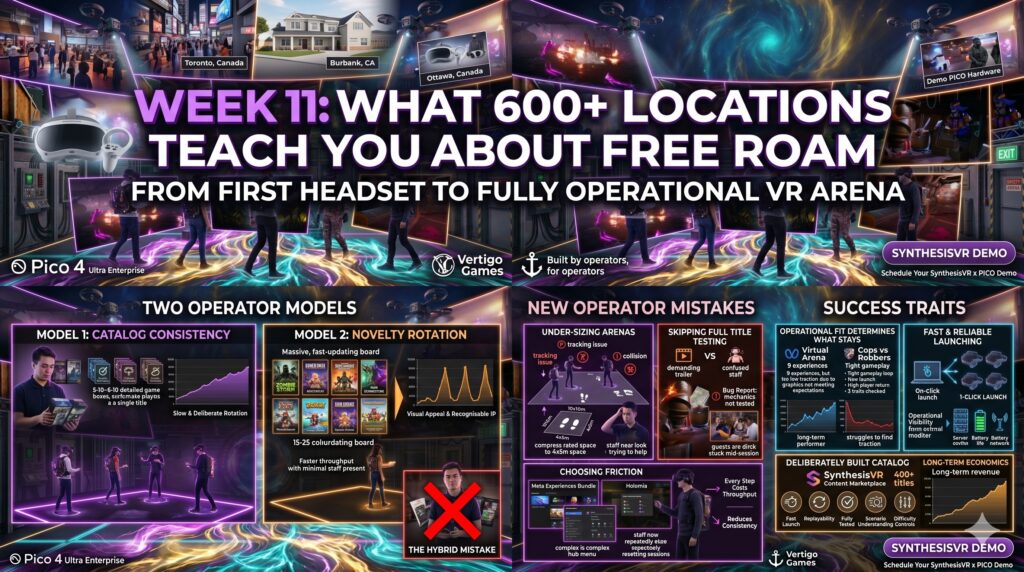
Two operator models, both valid
Across the fleet, two distinct approaches to content strategy work. They are not better-or-worse versions of each other. They serve different business models, and the operators who succeed are the ones who pick a lane and commit.
The first model is catalog consistency. These operators run 5 to 10 titles, know each game in detail, train staff on every scenario, and refine their lineup over months and years. Their content rotation is slow and deliberate. New titles get tested, evaluated against operational fit, and added only when they earn a permanent slot.
The second model is novelty rotation. These operators offer 15 to 25 titles at any time, refresh their lineup regularly, and lean on visual appeal and recognisable IP to attract first-time visitors. Their guests come for the newest experience. Operations are designed around easy launching, minimal staff intervention, and titles simple enough to play without much guidance. Recent releases like Zombie Storm and Insiders fit this model, with strong graphics, fast onboarding, and gameplay that does not require staff to walk groups through complex scenarios.
Both models generate revenue. The mistake is running a hybrid version of both without committing to either, which leaves operators with too many titles to operate well, not enough rotation to feel fresh, and staff who never quite master any of it.
What actually makes a title perform long-term
Visuals get a title in the door. They are not what keeps it in rotation.
Our sales team works with new venues every week, and the same pattern comes up. Graphics drive the initial title selection. Operational fit determines what stays. A title can offer nine separate experiences and strong arena specs, like Virtual Arena, and still struggle to find traction because the visuals do not meet what guests now expect from a 2026 free roam VR experience. A simpler title like Holomia VR with less content on paper, holds rotations for years because the gameplay loop is tight, the launch is fast, and players return for it.
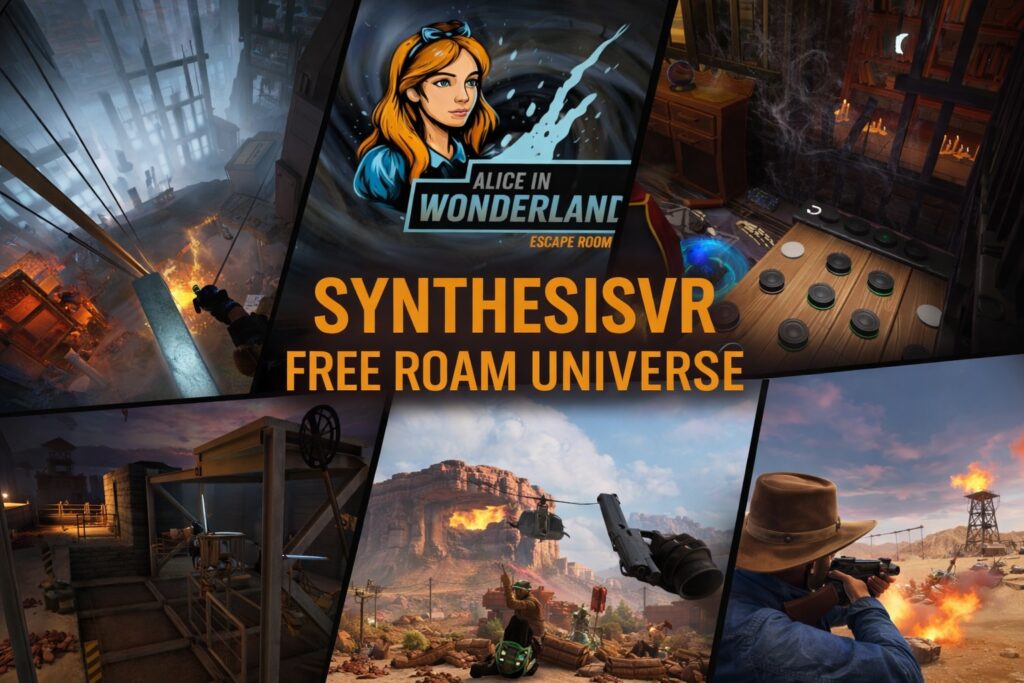
The pattern across the fleet looks like this. Long-term performers tend to share three traits: fast and reliable launching, gameplay that staff can fully understand and support, and replayability that does not depend on novelty. They are also titles the operator has actually played through, scenario by scenario.
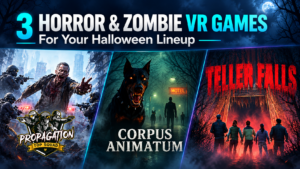
That last point matters more than new operators tend to realise. When a guest gets stuck mid-session and the staff member running the venue cannot help them, the experience breaks. Our support team regularly receives bug reports for titles where the issue turns out to be a level mechanic the operator never tested. Some titles, like Corpus Animatum, include adjustable difficulty controls that let staff tune sessions to player skill, but those features only get used when the operator knows they exist. A small, well-understood catalog of commercial VR games supports that kind of operational fluency. A constantly rotating one does not.
The mistakes new operators repeat most often
Pattern recognition across 600+ locations gives a clear list of what new operators consistently get wrong. Three come up most often.
Under-sizing arenas. A title rated for 6x6m and up to four players will not deliver a good experience in a 4x5m space. The arena specs developers publish are not aspirational targets. They reflect the minimum dimensions where the gameplay holds up. Compressing a recommended footprint to fit available space leads to player collisions, tracking issues, and reduced session quality. Both guests and staff feel it.
Skipping full title testing. New operators routinely add games to their lineup based on a trailer and a launch demo. They do not play through the title at every difficulty level, every player count, every scenario. When guests get stuck or confused, staff have no answer. That gap shows up in reviews and rebooking rates faster than any other operational issue.
Choosing titles with launch friction without recognising it. Some games require players to navigate hub menus or sub-launchers inside the headset before reaching gameplay. Meta Experiences Bundle and Holomia are two examples our support team flags often. The friction is not always obvious during evaluation, but it compounds across sessions. Every extra step costs throughput, increases the chance of staff intervention, and reduces the operational consistency that defines a profitable venue. Operators running these titles in commercial settings tend to either accept the trade-off knowingly, or move them out of the rotation after a few weeks of measuring reset times.
Why catalog consistency tends to win for most venues
For most operators, catalog consistency produces better long-term economics than novelty rotation. The reasons are operational, not philosophical.
Reset cycles run faster when staff know the launch sequence cold. Guest satisfaction improves when staff can guide groups through any scenario. Repeat bookings increase when there is something familiar to come back to. Difficulty settings and scenario controls get used when operators know their catalog deeply enough to apply them. Arizona Sunshine earns its slot in long-term rotations precisely because operators who run it know how it performs at every player count and skill level. That knowledge compounds session by session.
Novelty rotation can work, and a small percentage of operators run it well. It requires a different operational model: simpler titles, faster onboarding for staff on every new release, marketing budgets that drive new visitors rather than repeats, and content selection that prioritises visual appeal and ease of operation over depth. Operators committed to that lane sustain it through continuous content acquisition. The economics are different, the staff model is different, and the guest profile is different. None of those things are flaws. They just have to be chosen on purpose.
The error most new venues make is starting with a 20-title lineup, never refining it, and never committing to either model. Five titles that launch in seconds, run reliably, and pull players back will outperform 20 titles that load inconsistently, confuse staff, and fade after a single visit.
Build the library, then commit to it
Patterns at fleet scale point to one consistent recommendation. Choose the model that fits your business plan, build a catalog around it, and refine it deliberately. A small number of titles run well will always outperform a large number of titles run inconsistently. The platforms and hardware matter, but the content decisions made in the first six months shape the venue’s economics for years afterward.
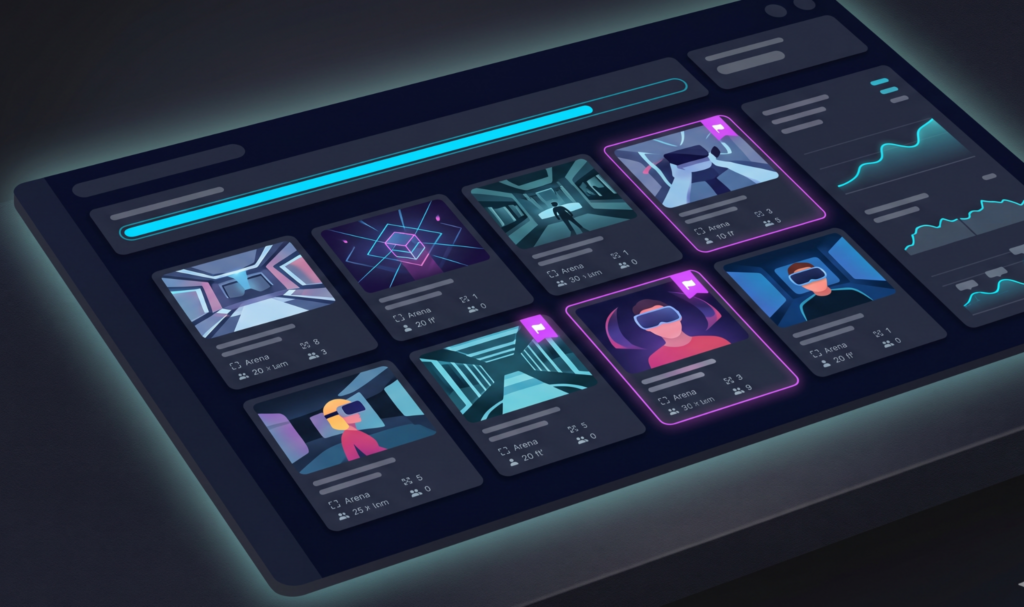
The SynthesisVR content marketplace covers 400+ commercial VR games across free roam, room-scale, and seated formats, every title available with the licensing models that fit how venues actually operate. Free test access lets operators evaluate titles before committing to a permanent slot, which is how the most disciplined operators build their libraries: a few titles at a time, fully tested, fully understood, and only then added to the rotation.
If you are still building your free roam catalog or weighing which titles to evaluate next, reach out anytime. Our team works with operators on this every week, and the same patterns we see across 600+ locations can save new venues months of trial and error.
Demo SynthesisVR on PICO Hardware
Stop fighting your hardware. Start operating your business. See how the PICO 4 Ultra Enterprise and SynthesisVR work together to solve:
- Manual Sync: One-click launch for the entire fleet.
- Drift and Mapping: Instant boundary sharing across all headsets.
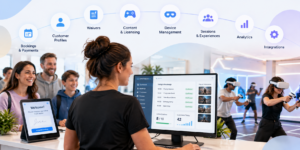
- Operational Visibility: Monitor devices, network, and battery life from one system.
- Built by operators, for operators. Trusted by 600+ locations.