Spooky VR games for arcades can fill very different roles in a fall content lineup. One venue may need something light enough for families and mixed groups, while another wants a longer haunted escape experience or a quick scare that fits between other attractions.
That variety matters as fall events, Halloween bookings, student outings, and group visits begin to pick up. Instead of building the whole seasonal offer around one type of horror experience, operators can choose content that fits different audiences, session lengths, hardware setups, and available play space.
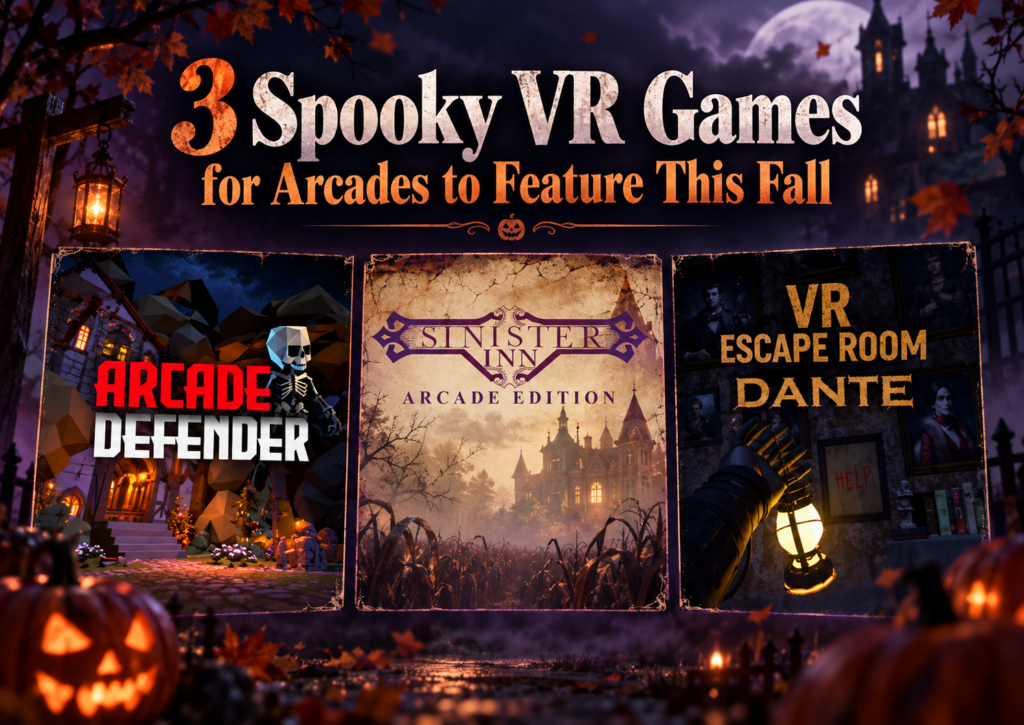
We recently looked at three very different options available through SynthesisVR: Arcade Defender, VR Escape Room: Dante – Haunted House, and Sinister Inn. Together, they show how broad the “spooky VR” category can be.
If you are already planning a larger seasonal promotion, our guide to building Halloween VR arcade packages covers timing, audience segmentation, packaging, and promotion. Here, we are going deeper into the games themselves.
| Game | Players | Session | Hardware | Format | Suggested Fit |
|---|---|---|---|---|---|
| Arcade Defender | 1–8 | Adjustable | PICO, Quest | Free-roam | Families, teens, mixed groups |
| VR Escape Room: Dante – Haunted House | 2–6 | 30–40 min | PCVR, Standalone | Free-roam and Room Scale | Friends, older groups, escape room fans |
| Sinister Inn | 1 | 3 min | PICO, Quest, Focus 3 / Vision | Free-roam walkthrough | Short horror attraction, add-on experience |
Arcade Defender: A Lighter Spooky Option for Larger Groups
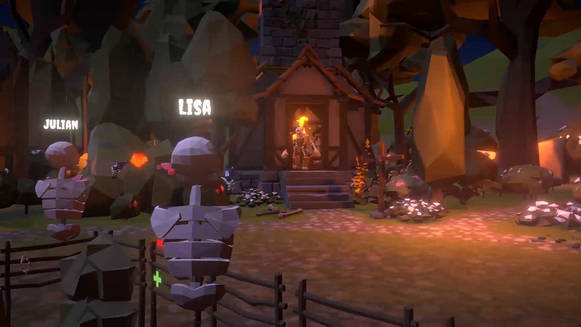
A fall attraction does not always need to be genuinely frightening. For venues serving families, younger teens, birthday groups, and mixed-age visitors, lighter seasonal content can often fit more bookings.
Arcade Defender takes that route.
Players defend a village from waves of small monsters as they try to make it through the night. The theme stays spooky enough for the season while keeping the presentation accessible, with a suggested age of 12+.
Operationally, the flexibility is one of its strongest points. Arcade Defender supports 1 to 8 players, runs on PICO and Quest, and uses an adaptive free-roam area with a maximum size of 10 × 10 meters, or 32.8 × 32.8 feet. Playtime can also be adjusted.
That combination gives operators room to use the title in different ways. A smaller group can play without needing to fill every available headset, while a larger booking can turn it into a shared attraction. Adjustable playtime can also help when operators are building the game into a wider package rather than selling it as the entire visit.
The title requires an internet connection and uses a standalone game server. For venues already operating standalone free-roam VR, that makes the hardware fit particularly relevant.
There is also a Game Community available for Arcade Defender. Operators considering the experience can use that space to share feedback and learn from other venues running the title.
Where Arcade Defender fits this fall
Arcade Defender makes sense when a venue wants seasonal atmosphere without limiting the audience to dedicated horror fans. It could sit comfortably inside a family Halloween package, an after-school promotion, or a fall group offer where some guests may enjoy spooky themes but have little interest in intense horror.
Its group capacity also makes it the broadest option of the three titles in this article.
VR Escape Room: Dante – Haunted House for a Longer Group Session
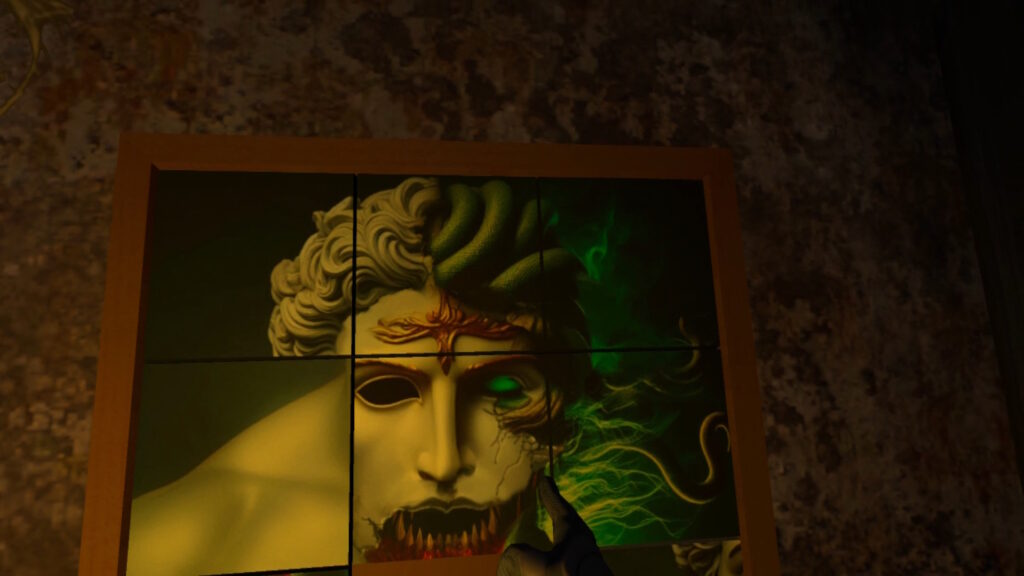
Some groups want more than a seasonal backdrop. They want to enter the haunted house, explore it together, solve problems, and stay in that world for most of their booking.
VR Escape Room: Dante – Haunted House moves much closer to that type of experience.
Dante supports 2 to 6 players and runs for approximately 30 to 40 minutes, giving operators a full-length cooperative VR escape room rather than a quick seasonal add-on.
The experience supports both PCVR and standalone hardware. Venues can run it in a 5 × 5 meter free-roam area, equivalent to 16.4 × 16.4 feet, and it is also available in a room-scale configuration.
That flexibility is useful because the experience does not depend on one venue layout. An operator running a dedicated free-roam area can use the larger physical format, while another location may have a room-scale setup that better fits its existing floor plan.
The longer session also changes how a venue might sell it.
A 30 to 40 minute haunted escape can form the main attraction in a booking. That makes it particularly relevant for groups of friends, older teens, adult social bookings, couples, and customers who already understand the appeal of escape rooms.
The cooperative format gives guests something to focus on together throughout the session. Horror provides the atmosphere, while the escape room structure gives the group a shared objective.
Dante requires an internet connection and supports a standalone game server. Its SynthesisVR listing also includes access to a Game Community, giving operators another place to compare experiences and share practical feedback.
A natural crossover between VR arcades and escape rooms
Dante also gives venues a useful marketing angle outside Halloween itself.
“Haunted VR escape room” communicates the experience more clearly to a local audience than a game title alone. Customers already understand what an escape room is, and the haunted-house theme adds a seasonal reason to try it during fall.
That makes Dante useful well beyond a single Halloween weekend. Operators can promote it throughout September and October, then keep it available for customers who actively look for horror or escape room content later in the year.
Sinister Inn: Three Minutes, No Controllers, Just Keep Walking
Sinister Inn takes the haunted-house idea in a completely different direction.
The entire experience lasts three minutes.
There are no controllers to learn and no puzzles to solve. A player physically walks through the halls of the Sinister Inn and experiences what happens along the way.
That simplicity is central to the attraction.
The inn belongs to Isabelle H. Minister, whose spirit has become intertwined with the property. The player enters alone and follows the route through the building, with the experience built around movement, atmosphere, anticipation, and the question of what might appear around the next corner.
Sinister Inn supports PICO, Quest, and Focus 3 / Vision headsets. It is a single-player experience with a recommended age of 16+ and uses a free-roam footprint of approximately 1.8 × 6.1 meters, or 6 × 20 feet.
The unusual footprint is worth noting. Sinister Inn uses a long, narrow play area rather than the square arena associated with many free-roam games. For some venues, that may open up a different part of the floor plan for VR content.
It also uses the SynthesisVR CDN and has its own Game Community.
A different role in the attraction mix
The three-minute runtime gives Sinister Inn a very different commercial role from Dante.
It can function as a short standalone scare, part of a larger Halloween visit, or an additional experience alongside longer attractions. The concept also takes very little explaining to a guest: enter a haunted inn, walk through it, and see whether you make it out.
That clarity can be useful during busy seasonal events, especially when visitors are moving between several activities.
Operators should still think carefully about how a short-format experience fits their own pricing and booking structure. A three-minute attraction will usually need different positioning from a 30-minute VR escape room. The value comes from the format, atmosphere, and immediacy of the experience rather than session length alone.
Three Spooky Games, Three Different Jobs
Looking at these titles side by side shows why content selection matters when building a seasonal attraction mix.
Arcade Defender gives operators an accessible multiplayer option for groups of up to eight. Dante turns the haunted-house theme into a longer cooperative VR escape experience. Sinister Inn strips the format down to a three-minute physical walkthrough built almost entirely around suspense.
The right choice depends on the role the experience needs to play inside the venue.
A family-focused arcade may get more value from an accessible group title. A location with strong escape room demand may prefer a longer 2–6 player experience. A venue running multiple attractions during a Halloween event might find room for a very short horror walkthrough alongside its main sessions.
There is also no reason those formats have to compete with one another. A broader content library lets operators serve different audiences across the same fall campaign.
Build the Fall Offer Around the Audience
Before adding seasonal content, it helps to start with the guests you expect to attract.
Families and younger groups usually need a different experience from adult horror fans. A birthday party of eight also creates different operational requirements from a couple looking for a haunted escape room or an individual trying a three-minute scare between attractions.
Session duration matters too. Longer experiences can carry more of the booking themselves, while short-form attractions may work better when packaged with other activities. Group capacity affects scheduling, and hardware compatibility determines whether a title fits the headset fleet already on the floor.
Those decisions become more important as a venue adds content. Operators need to think about free-roam VR, standalone VR, PCVR, available arena space, group size, session management, and content rotation as parts of the same operating model.
That is also where a VR content marketplace becomes useful. Instead of treating every new title as an isolated addition, operators can compare content by audience, format, hardware, session length, and the role it could play within the wider attraction mix.
Through SynthesisVR, operators can manage commercially licensed VR content across different attraction formats while keeping session and content management within the same operating environment.
Keep Exploring Spooky VR Content
These three games cover only part of the seasonal content available to commercial VR venues.
Operators looking for more Halloween content can browse the SynthesisVR Halloween category, while venues specifically looking for arena-scale experiences can explore the wider free-roam VR catalog.
The useful question is less about finding the scariest title and more about finding the experience that fits the audience, space, hardware, and session model already working in your venue.
For some locations this fall, that may mean defending a village together. For others, it may mean spending 40 minutes inside a haunted escape room.
And sometimes, three minutes inside the wrong inn is plenty.