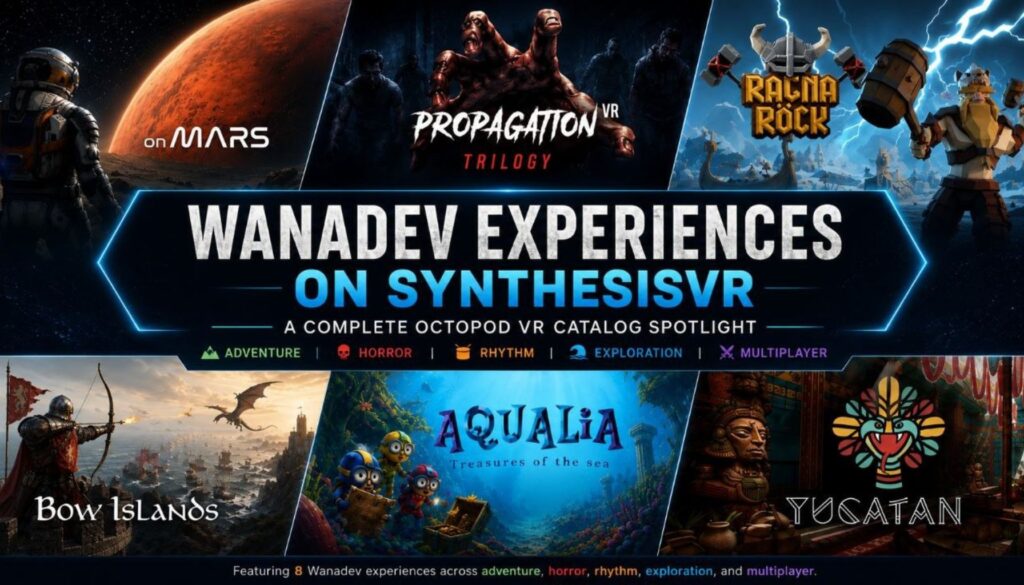
Octopod VR’s arcade catalog is migrating to SynthesisVR. Wanadev, the studio behind the games, announced the change directly: their flagship VR arcade experiences have joined the SynthesisVR ecosystem, which becomes the exclusive distribution platform for the titles going forward. Wanadev continues to build and support the games. What changes is where operators go to license and manage them.
Ten titles are live on SynthesisVR today: Aqualia, Bow Islands, On Mars, Yucatan, the Propagation trilogy, Ragnarock, Propagation: Top Squad, Propagation: Top Survivors. All run on PCVR, built for room-scale and free-roam VR arcade spaces.
Why Wanadev chose SynthesisVR
Wanadev’s decision to move distribution to SynthesisVR came down to focus. Running the Octopod platform alongside game development and publishing was pulling resources away from the side of the business Wanadev wanted to grow, and moving distribution to a partner frees that time up for building and publishing games instead of maintaining a distribution platform. SynthesisVR’s feature set was close enough to what Octopod customers already used that the switch could happen without asking operators to learn an entirely new way of managing licenses, which is part of why Wanadev has called the transition seamless.
For operators coming over from Octopod, the move also opens up more than the ten titles covered here. SynthesisVR’s catalog spans a broader range of studios and genres, so an Octopod customer moving over gains a wider selection to draw from, not just a new home for the games they already ran. And for venues thinking beyond PCVR, the same account handles standalone titles too, so a location built around Octopod’s PCVR catalog has a path to add standalone content later without bringing in a second platform to manage it.
Switching from Octopod? The transition is already built.
This matters differently depending on where an operator is starting from.
If you’re currently licensing through Octopod VR
The transition has been set up to run without interrupting service. Operators already running these titles do not need to pull them from rotation or wait for a hard cutover date. The practical next step is to contact SynthesisVR support through the contact page to get the catalog attached to an existing account, or set one up if the venue is new to the platform.
You can also follow full migration guide here: Migrate from OctopodVR to SynthesisVR
Bringing the licensing partnership to SynthesisVR also brings a pricing benefit for some locations, with select venues seeing a reduction in licensing costs as part of the move.
If you’ve never licensed Octopod VR titles before
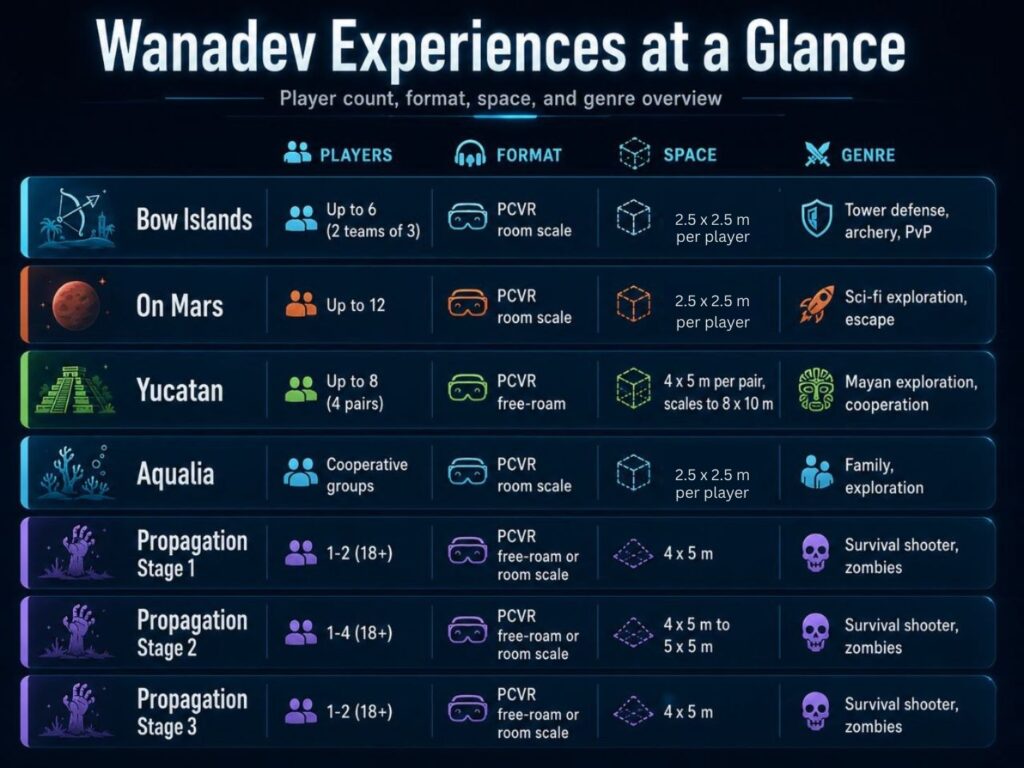
For operators who evaluated these games in the past and never brought them into a venue, or who are only discovering the catalog now, the appeal is the same as it always was. The table above covers player count, format, and space for each title. Now let´s dive in each title a bit more.
The Propagation trilogy
Propagation is built as a three-part arc rather than three standalone titles, and operators get to decide whether to run it that way. Stage 1 drops one or two players into a supermarket overrun by a zombie swarm, using that contained setting to teach movement, aiming, and pacing before the difficulty ramps up. Stage 2 opens the format to four players and hands the group a sniper rifle, moving the fight into a bigger street-level battle where coordination between players starts to matter as much as aim. Stage 3 takes the survivors underground into a new set of monster encounters, closing the arc in a tighter, more claustrophobic space than the first two stages.
All three run on PCVR, in free-roam or room scale depending on the space available, with footprints between 4x5m and 5x5m. The 18+ recommendation across the trilogy makes it a stronger fit for an evening booking than an afternoon one, and operators running it as a three-part session have a built-in reason to bring a group back for the next stage rather than treating each part as a one-off.
Bow Islands
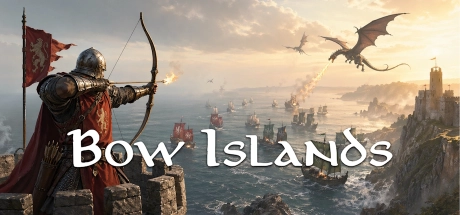
Bow Islands puts two teams of up to three players on opposing ships, firing arrows at each other’s vessels and the dragons circling above. It runs on PCVR room scale in a standard box footprint, which keeps the setup consistent with whatever else is already running in that space.
The format is the reason it earns a spot as a first-time title. A new player can understand “shoot the other team’s ship” in the time it takes to hand them a bow, and the same structure holds up for a group that already plays competitively and wants a tighter, faster match. That range, from a birthday party group picking up a headset for the first time to a league night rematch, makes it one of the easier titles to schedule without needing to know the group’s experience level in advance.
On Mars
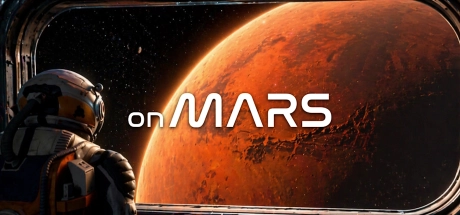
On Mars is built for scale. At up to 12 players, it handles a corporate outing or a large friend group in a single session where most box-format titles in the catalog would need to split the group in two. The sci-fi exploration and escape format runs on PCVR room scale in a standard box, so it slots into the same physical footprint as smaller-capacity titles without extra setup.
For weekday bookings especially, the capacity is the operational advantage. A single 12-player session covers ground that would otherwise take two or three back-to-back sessions with a smaller-format game, which matters more on a Tuesday afternoon corporate booking than it does on a weekend walk-in.
Yucatan
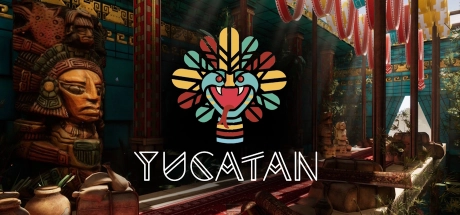
Yucatan runs in pairs, up to four pairs at once, through a Mayan exploration and cooperation format built around PCVR free-roam. The footprint scales with the venue: 4x5m per pair at the low end, up to 8x10m if the space and group size support it, which gives operators some room to fit it into venues that couldn’t take a fixed large-format free-roam title.
That flexibility, combined with a cooperative structure rather than a competitive one, makes it a natural fit for family bookings and after-school groups where the goal is working together through the space rather than winning against another team.
Aqualia
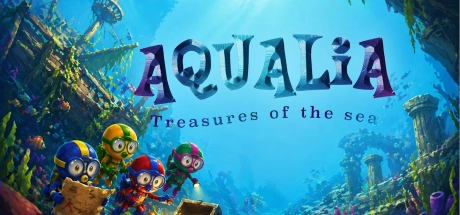
Aqualia is built around cooperative groups exploring together, running on PCVR room scale in a standard box footprint. The family and exploration framing keeps the pacing gentler than the catalog’s combat-focused titles, and it carries no 18+ gate, which puts it in the same schedule slot as Yucatan for operators building out a family or after-school block.
Ragnaröck
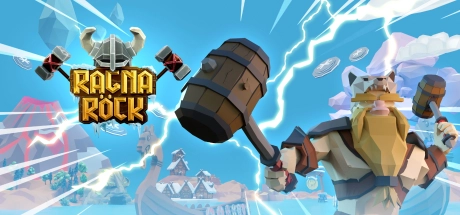
Ragnaröck breaks from the rest of the catalog on format alone: it’s a rhythm game, not an exploration, combat, or PvP title. Players take on the role of a viking ship captain, crushing incoming runes with two hammers in time with tracks that run from Celtic rock to viking power metal, racing rival crews across six environments drawn from Norse mythology. Runs solo or multiplayer on PCVR room scale.
The pull for operators is variety. A catalog built mostly around exploration and shooter formats benefits from one title that rewards rhythm and timing instead, and it gives staff an easy answer for a guest who wants something less combat-focused without dropping into a slower family title. Its player capacity and exact space footprint aren’t listed on the current game page, so treat those as unconfirmed until checked directly.
If you’re already running SynthesisVR
For venues already on the platform, this is a catalog expansion with no new vendor relationship to set up. The Wanadev titles sit inside the same dashboard as everything else already licensed, with the same commercial terms process and no separate Octopod account to maintain. Operators who considered these games in the past but held off because of the extra vendor overhead now have that objection removed.
Licensing through SynthesisVR
SynthesisVR routes commercial licensing for its full catalog, now including these Wanadev titles, through one dashboard. Operators add a title and the license terms attach automatically, instead of managing a separate agreement for every studio whose content they want to run. Beside PCVR, the platform also supports standalone headsets across free-roam, escape VR, and racing simulator content, for operators expanding past their current lineup.
Questions about migrating an existing Octopod license, or licensing these titles for the first time, can go to the SynthesisVR team directly.
Related Reading
Cooperative VR Adventures Worth Exploring in 2026
VR Room-Scale Classics Every VR Arcade Operator Should Know About
Unlock Weekday Revenue with Step into Webb on SynthesisVR: Free-Roam VR School Field Trips