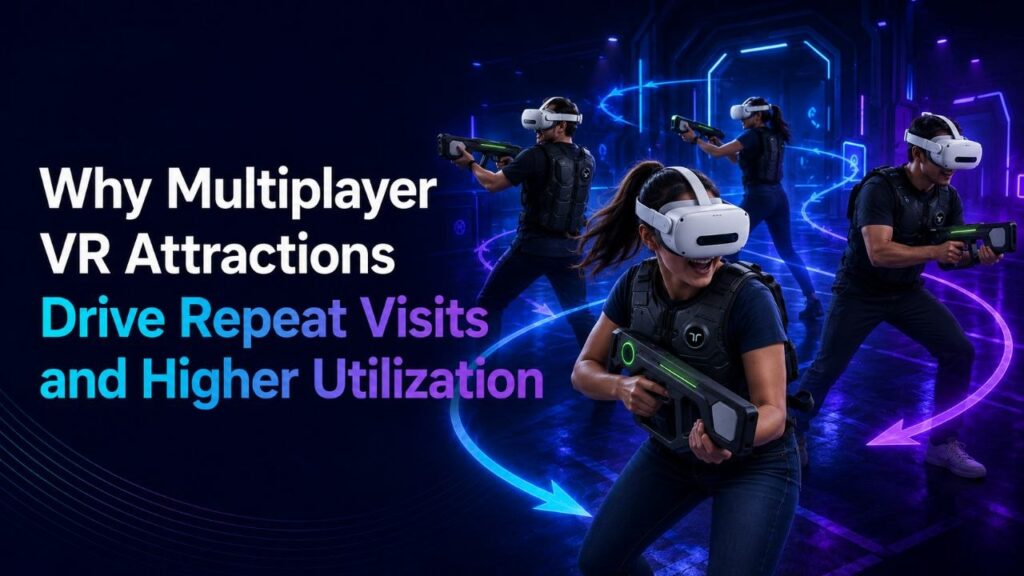
Some venues find their best-performing attraction is not the newest title on the floor. It is the multiplayer experience that the same group of friends books again three weeks later, then again after that. One operator running a six-headset free-roam arena noticed this directly: a yearSome venues find their best-performing attraction is not the newest title on the floor. It is the multiplayer experience that the same group of friends books again three weeks later, then again after that. One operator running a six-headset free-roam arena noticed this directly: a year-old multiplayer title outsold two new solo releases for three straight months, driven almost entirely by repeat group bookings.
That pattern shows up across the LBE VR industry often enough to matter for how operators think about attraction mix. A solo VR experience can deliver a strong first visit. It rarely creates a second one, because the player has already seen what the headset shows them. A multiplayer experience changes shape every time a different group walks in. The teamwork shifts, the score resets, the in-jokes from last time carry over, and the session becomes a plan to repeat rather than a box to check.
The simple equation still holds for VR arcades: more immersive experiences create higher customer satisfaction, and higher satisfaction creates stronger returning business. Multiplayer helps because it increases immersion through shared presence. Players do not only react to the virtual world. They react to each other inside it.
Why solo VR struggles to generate repeat bookings
A single-player VR attraction is usually built around a fixed narrative or a fixed challenge. Once a player finishes it, the core reason to return drops sharply. Operators running solo-heavy lineups often see strong opening weeks followed by a falloff in repeat traffic, because the content has less to offer a returning customer beyond a slightly faster completion time.
Multiplayer content has a different ceiling. A four-player co-op title or a competitive free-roam shooter changes with every group composition. Two friends playing together create a different session than four coworkers on a team outing, and both create a different session from the same four coworkers coming back a month later with two new colleagues. The content stays the same. The experience does not.
For first-time visitors, the headset itself often creates the initial “wow” moment. Returning customers need a different reason to feel that again. Multiplayer gives them that reason because the next session includes new players, new team dynamics, new competition, and a fresh chance to improve.
Content rotation and replayability
Replayability is not only a property of the game itself. It also depends on how often the venue rotates what is on offer. A venue with a static lineup of three multiplayer titles will eventually exhaust even its most social customers. A venue that rotates four or five multiplayer experiences through its schedule, swapping in new titles every few weeks while retiring others temporarily, gives returning groups a reason to book again even when the social dynamic alone would have been enough.
This is where attraction mix becomes an operational decision rather than a content decision. A six-bay arena running one anchor multiplayer title alongside two rotating secondary titles can support a wider range of group sizes and repeat patterns than the same arena running six different solo experiences. The rotation does not need to be constant. A monthly refresh of one or two titles, timed against booking data, is often enough to keep returning groups engaged without requiring a full content overhaul.
The strongest multiplayer titles for repeat visits usually share two traits: they are simple to start and they leave room for improvement. Players should understand what to do quickly, especially in a paid commercial session, but they should also feel they could perform better next time. That learning curve matters. A group that finishes a session saying, “we almost had it,” or “next time we beat that score,” already has a reason to return.
Why social experiences generate stronger repeat traffic
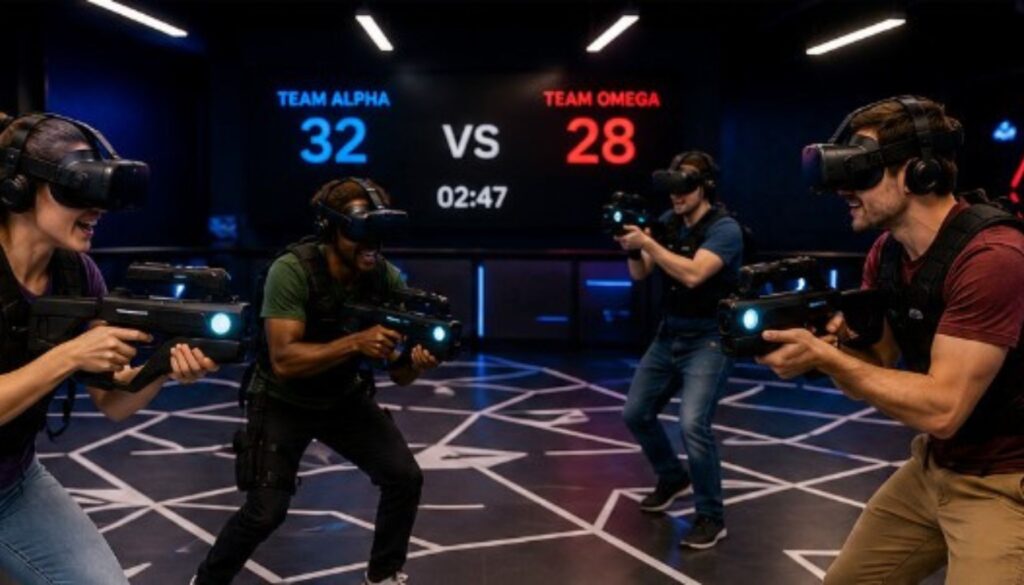
The social mechanism behind repeat visits is straightforward. A solo experience is something a person does. A multiplayer experience is something a group plans. Group plans get rebooked because the social commitment, not just the content, drives the decision to return. A birthday group, a corporate team, or a regular friend group treats a strong multiplayer session the way they would treat a favorite bowling night or trivia night: a recurring plan built around people, with the attraction as the setting rather than the sole draw.
Competition strengthens that effect. If one team wins the first round and the other wins the second, the unfinished tiebreaker becomes part of the experience. Some groups extend the session immediately. Others leave with a reason to come back. Co-op formats can create the same effect when players fall just short of completing a mission or decide they want to bring a different group next time.
This shows up directly in what operators ask for. Across requests we see from venues evaluating new content, “does it support multiplayer” is one of the most common requirements, often ranked above genre or theme. Operators are not asking for multiplayer because it is a trend. They are asking because they have already seen what happens to repeat bookings when a title only supports one player at a time.
It also shows up in internal platform usage data across SynthesisVR and SpringboardVR. The titles with the highest total play time are overwhelmingly multiplayer experiences, not solo ones. That pattern holds across genres, from competitive shooters to cooperative survival games to multiplayer sports titles. Solo experiences still have a place in a lineup, especially for specific audiences or lower-capacity windows, but they rarely account for the bulk of usage once a venue has several multiplayer options in rotation.
This is also why multiplayer formats tend to perform well across different group sizes. A 2-player co-op format and an 8-player competitive format can pull from the same content library but serve very different repeat-visit occasions, from a quick date-night session to a full team-building booking. Venues that support a range of group sizes within their multiplayer lineup capture more of these repeat occasions than venues offering only one fixed format.
How attraction mix affects utilization
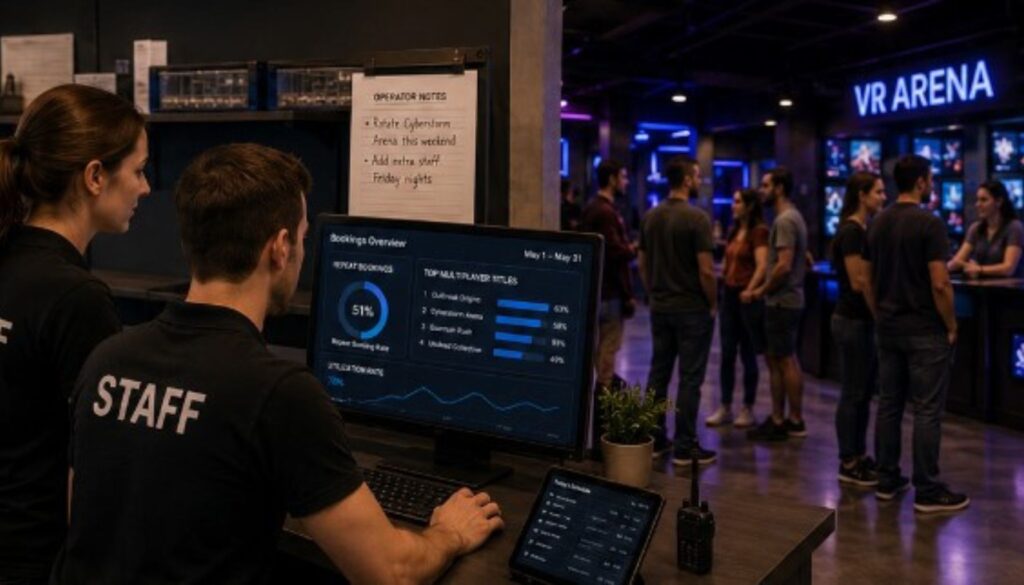
Utilization is where this becomes a numbers problem rather than only a content problem. A venue running mostly solo experiences can fill first-time slots well but may struggle to fill weekday and off-peak hours, because past customers have fewer reasons to return on a Tuesday afternoon. A venue with a strong multiplayer core can fill those same slots with returning groups who already know the experience works for them and just need a time that fits their schedule.
Multiplayer also creates more natural upsell opportunities. When a venue advertises a game as multiplayer-compatible, a customer who planned to book one headset may bring a friend, a couple may book together, or a small group may choose a larger session. The more clearly venues present multiplayer options on their website, booking flow, and in-venue recommendations, the easier it becomes to fill more headsets per session.
Operators managing a fleet of headsets across multiple bays also see a throughput benefit. Multiplayer sessions group several players into one scheduled block, which reduces the per-player staffing and onboarding time compared to running several solo sessions back to back. A six-player free-roam session run once an hour produces more booked seats per staff-hour than three separate solo sessions in the same window, even before accounting for the higher likelihood that the multiplayer group rebooks.
Setup time still matters. A multiplayer title that creates excitement but requires staff to spend too long configuring lobbies, pairing players, or troubleshooting launch steps can damage the customer experience before the session begins. For commercial venues, simple setup is part of replayability. Players remember the session, but they also remember whether the group started on time.
Tracking which multiplayer titles drive repeat bookings, and at what frequency, gives operators a clearer signal than overall attraction popularity. A title with modest first-visit numbers but a high rebooking rate among groups is often worth more to long-term utilization than a title that draws strong first-time interest and little else. Operators who can see this distinction in their booking history are better positioned to decide which titles to keep, which to rotate out, and which group formats to expand.
Once a venue runs several multiplayer attractions, rotation becomes difficult to manage from memory alone. Operators need to know which titles bring groups back, which formats work best for different booking types, and when a title should stay active or rotate out temporarily. With SynthesisVR, operators can manage commercial VR content, organize multiplayer sessions, and adjust their attraction mix from one VR operator platform instead of treating content decisions as guesswork. That gives venues a clearer way to connect content rotation, repeat visits, and utilization across the week.
Multiplayer attractions create repeat demand because the session belongs to the group, not just the headset. The title matters, but the people, score, teamwork, and shared memory give players a reason to come back. For operators, that turns multiplayer content into more than entertainment value. It becomes a utilization strategy.
Build a stronger multiplayer attraction mix with less guesswork. Try SynthesisVR’s free plan, get $250 in platform credit, and explore commercial VR titles from the largest VR content marketplace for LBE, including many games with free trial periods. Create your free account now.
Related reading
PCVR vs Standalone VR for Commercial Venues
Cooperative VR Adventures Worth Exploring in 2026
VR Room-Scale Classics Every VR Arcade Operator Should Know About