
Why PVP VR games earn repeat bookings
A competitive VR session rarely ends when the timer runs out. Players compare scores. They argue about tactics. Then they start planning what they would do differently next round.
That reaction is what gives PVP VR games a specific role in a commercial content mix. Players get a built-in reason to book again. They also get something to talk about after they leave the headset.
SynthesisVR’s earlier post on competitive PCVR games covers why that rematch pattern shows up across scored formats in general. This list stays inside player-vs-player specifically, with three titles built around direct duels, team battles, and shooter PvP modes.
Take a group of six friends at a VR arcade. A cooperative mission ends in a shared result, win or lose together. A PVP match ends with a winner, a few near misses, and an unsettled rivalry. The player who came in second wants a rematch. The winning team wants to defend the result. That is a second booking before the operator even mentions a discount.
PVP VR games also span more than one type of commercial VR experience. Operators can run short room-scale duels, free-roam team battles, and full multiplayer shooters under the same category. That range works across walk-ins, birthday groups, student bookings, corporate outings, and returning players.
All three titles below run on PCVR, with SteamVR-compatible headsets, and operators can license each one through the SynthesisVR marketplace.
RevolVR 3: fast competition with a simple learning curve
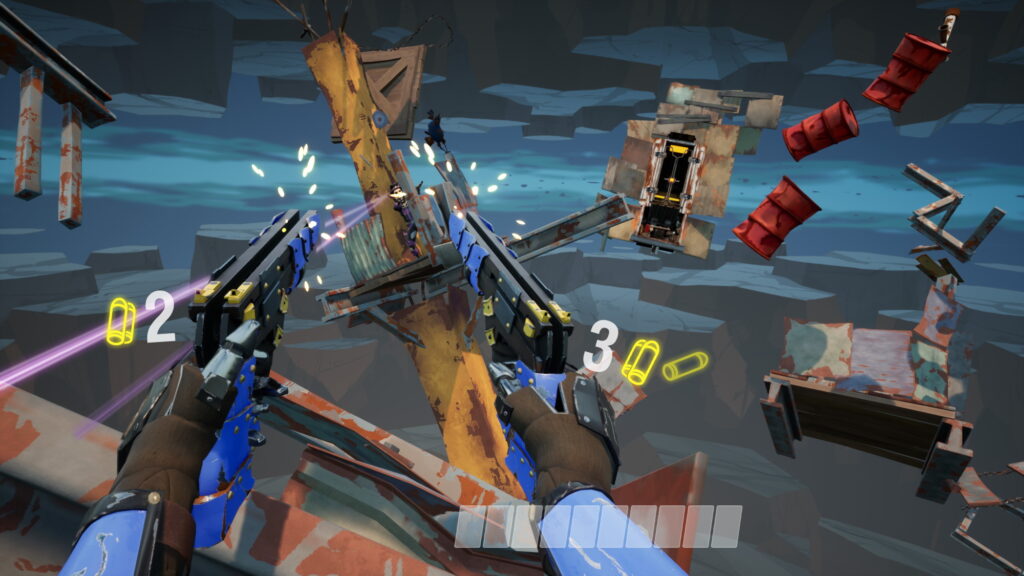
RevolVR 3 runs on PCVR room-scale setups. It puts two to six players inside colorful robotic gunslingers for quick revolver duels across three arenas. Players choose from four characters, each with a different weapon and shooting style. Then they move, duck, use cover, and compete for the highest score.
The concept is easy for a new group to grasp. Players pick a character, aim at their opponents, and stay out of the line of fire. That simplicity lets staff move groups into the experience fast, without a long explanation.
Operators can configure rounds between five and fifteen minutes, which works for short rotations and longer competitive bookings alike. Local servers cut the time spent searching for matches, and bots fill in when fewer players show up. Leaderboards and spectator software also put the match on display outside the headset. Waiting visitors get a clear view of the action too.
For a VR arcade, RevolVR 3 works as an accessible entry point into PVP. New players start fast, and returning groups improve their movement, positioning, and accuracy over repeated rounds.
Holybots Arena: tactical free-roam battles built around teamwork
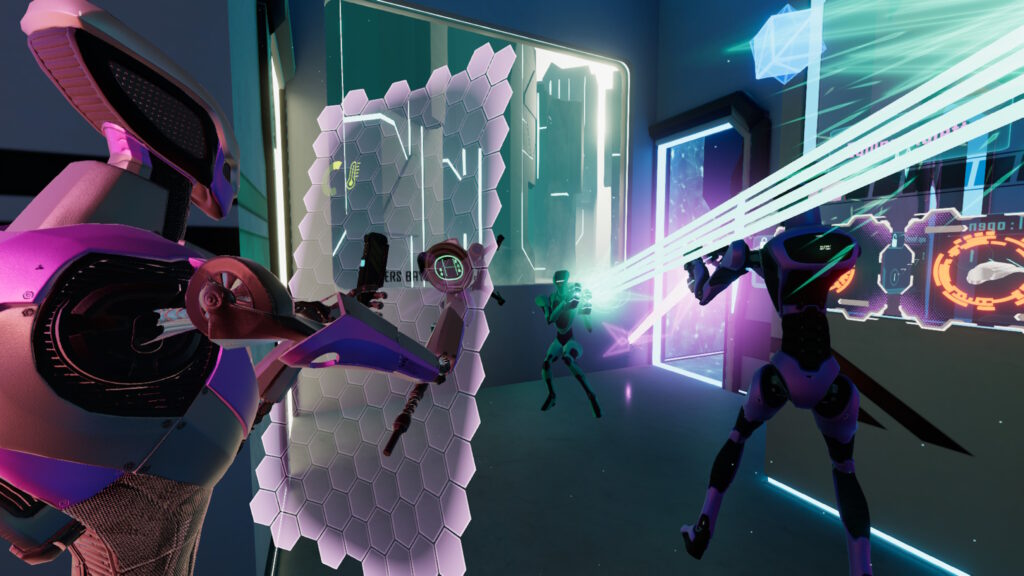
Holybots Arena runs on PCVR free-roam setups and expands PVP into a team format. Players become combat robots fighting over artifact fragments inside a cyber-futuristic arena.
Winning takes more than eliminating opponents. Teams collect and protect fragments. They use physical and holographic cover, coordinate attacks, and recover a teammate’s fragment when that player goes down. The objective gives every team a reason to keep talking during the match.
The game supports two to eight players, depending on the play area. Configurations start at 6 × 6 meters for two to four players. They scale up to 10 × 10 meters for groups of up to eight. Operators can match the session to their venue size and headset count.
Holybots Arena suits groups that want more structure than a straight free-for-all. A team can lose individual fights and still win by controlling the objective. That creates varied outcomes and gives groups something specific to adjust before a rematch.
It also gives free-roam venues a way to sell PVP around teamwork, not just individual scores. Corporate groups, student societies, and friend groups can split into teams. They compete around a shared objective instead of chasing separate high scores.
Zero Caliber 2 Remastered: deeper gunplay with flexible sessions
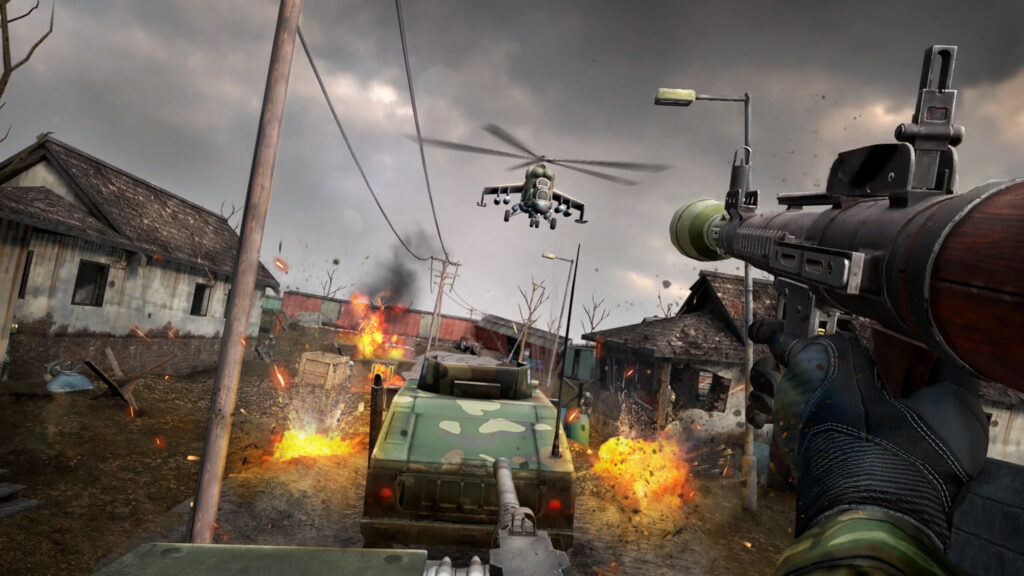
Zero Caliber 2 Remastered is a PCVR room-scale military shooter. It pairs a solo and cooperative campaign with competitive PVP modes. Operators can run one license across several audience types.
The game leans on fast onboarding and intuitive controls. Then it adds cinematic firefights, airstrikes, improved weapon handling, and a large unlockable arsenal. New players get into the action fast, while returning players get a wider weapon selection and more progression to chase.
Session flexibility is the strongest commercial angle here. Operators can run short, high-energy PVP rounds, or give returning players more time in the campaign and cooperative modes. Either way, the same title covers walk-in groups and visitors who want a longer FPS session.
For venues with a shooter audience already in place, Zero Caliber 2 Remastered gives players a reason to come back beyond one competitive round. They can try new weapons, switch modes, or run a cooperative campaign with a different group.
Three different roles in a competitive lineup
RevolVR 3 offers quick, easy-to-explain competition with configurable round times. Holybots Arena adds team tactics and an objective-based free-roam match. Zero Caliber 2 Remastered brings a deeper PCVR shooter that covers competitive, cooperative, and solo play in one license.
That range matters when building a rotation. Not every group wants the same intensity or match length. A duel suits first-time visitors. An arena battle suits organized teams. A deeper FPS suits players who already know VR controls.
Turning PVP VR games into repeat visits
Clear match results make PVP VR games useful for repeat-visit campaigns. Venues can post weekly winners, run team challenges, or host rematch nights. They can also rotate competitive titles into slower weekday slots. The game supplies the rivalry, and the operator turns it into a repeatable offer.
Explore RevolVR 3, Holybots Arena, and Zero Caliber 2 Remastered on the SynthesisVR marketplace.
Related Reading
Why Multiplayer VR Attractions Drive Repeat Visits and Higher Utilization
How VR Arcade Operators Build a Balanced Attraction Mix
How VR Entertainment Centers Attract Student Groups and Young Adult Audiences